The Victorian Oral Health Alliance (VOHA) is a group of the key professional, welfare and consumer organisations, and community dental services, committed to improving Victorians’ oral health and access to dental care.
Given that the State Government has recently allocated a sum to public dental care for innovative approaches to reducing dental waiting lists, VOHA has been active in promoting some early thinking about possible approaches.
We sought short video statements from interested services and others about which innovations could work at either a State or local service level. These 3-minute videos was shared in the Dental Health Week event.
VOHA hopes this will stimulate further ideas and also be useful to the Department of Health and DHSV as they develop the aims and processes for utilising the yet unannounced new innovation funding.
The Victorian Oral Health Alliance, a coalition of dental health professional, service and consumer organisations, is disappointed that once again the mouth has been left out of the body in the Federal Budget. This again highlights the lack of understanding of the importance of good oral health and the links to general health.
Public oral health care is at a crisis point, with for example average waiting times for basic dental care of 17.5 months across Victoria, but up to 30 months in some parts of the state. With access to care delayed due to COVID-19 restrictions, we expect that these waiting times nationally will continue to increase. The Royal Commission into Aged Care Safety and Quality has also highlighted the significant neglect of oral health in residential aged care and recommended a Senior Dental Benefits Scheme be established under Medicare to make access to care much easier and affordable.
The need for the Morrison Government to make a greater investment into improving the oral health of vulnerable Australians is clear.
What we got instead was an announcement of an extension to the National Partnership Agreement on Public Dental Services for Adults for 2021/22 – funding that had already been provided by the Government – and an extension of the eligibility for the Child Dental Benefits Scheme to children under the age of 2 years.
Whilst VOHA welcomes the extension of funding for the National Partnership Agreement for another year, of real concern is that the funding amount – $107.9m for 2021/22 – has not increased since 2017/18. It also reinforces the piecemeal approach to dental funding. The extension does not provide any certainty to public dental agencies beyond 2022. There is a real need for an overhaul to public dental funding to ensure a sustainable system that will improve access to dental care for vulnerable Victorians.
VOHA does welcome the extension of the eligibility for the Child Dental Benefits Scheme (CDBS) to children under two years old, as at least 10% of children experience tooth decay by the age of 1 year, and the need for early intervention and prevention is critical. However, there was a missed opportunity to extend the scheme to provide funding for treatment provided under general anaesthetic, and care provided by dental students. Dental problems are the leading cause of preventable hospitalisation amongst Australian children (over 25,000 p.a.), and public dental services are not adequately funded to manage this care. Extending the CDBS to treatment provided under general anaesthetic would increase access to these much need services across the sector.
Hundreds of thousands of older Australians will continue to miss out on vital dental care as the Government has not yet invested in establishing a Seniors Dental Benefits Scheme. VOHA urges the Morrison Government to listen to consumers and oral health professionals, and to make a significant investment in improving the oral health of all Australians.
Contact Tony McBride – VOHA Spokesperson 0407 531 468
The Victorian Oral Health Alliance (VOHA) is a group of key professional, welfare and consumer organisations and service providers, committed to improving Victorians’ oral health and access to dental care.
Good oral health is important for general health and wellbeing and the impact of oral disease places a considerable burden on individuals, families and the community.
This position paper outlines the two major initiatives that VOHA believes are required to improve access to oral health care for both older Australians and for disadvantaged adults more generally in Australia. These are: • Establishing a Seniors Dental Benefits Scheme as a matter of urgency to make oral health/dental care more accessible to all older Australians, as recommended by the recent Royal Commission into Aged Care Quality and Safety. • Providing a sustainable long-term funding model with the state/territory public dental services for disadvantaged and vulnerable adults.
We recently asked VOHA member and Chief Executive Officer of the Australian Dental Association Victorian Branch about his oral health passion. Below is his response.
Why is oral health important to you?
I graduated as a dentist 25 years ago, and spent time working across a range of practice settings, including the Australian Army, private and public practices in metropolitan and regional areas as well as an Aboriginal health service. From there I moved into an academic career at Melbourne Dental School with a focus on dental public health. I’m interested in how we can improve access to dental care for the most vulnerable people in our community, and my PhD research looked at oral health and access to dental care in nursing homes. This research drove changes to regulations and removed barriers that were preventing dental hygienists from providing care directly to residents.
I became involved in the Australian Dental Association Victorian Branch and spent 11 years on their board, including a term as the President, before stepping away to focus elsewhere. But when the opportunity arose to become the CEO of the Branch in 2017, I jumped at the opportunity. I had been involved through the ADAVB with the earlier iteration of the Victorian Oral Health Alliance, but saw an opportunity to relaunch the alliance with waiting times for public dental care increasing. I’m really excited to see VOHA growing and expanding in terms of influence, and am hopeful that our work will help to improve the public dental care system in Victoria.
Special thanks to the Australian Dental Oral Therapists’ Association and the Dental Hygienists Association for this report.
Launch of the 2020 Australian Oral
Health Workforce Report
The Australian Dental and Oral Health Therapists’ Association (ADOHTA Ltd.) and the Dental Hygienists Association of Australia (DHAA Ltd.) today jointly released the 2020 Australian Oral Health Workforce Report. The report provides comprehensive information on the demographic, geographic and employment characteristics of Dental hygienists, Dental therapists and Oral health therapists in Australia. It also provides a comparative analysis on the impact of the pandemic dental restrictions to employment characteristics of the workforce.
Author and ADOHTA Ltd. President Dr Nicole Stormon said that the report is a peer reviewed, evidence-based publication that provides important insight into the current oral health workforce. “It contains reliable data to allow the profession, governments and management to better utilise existing capacity and forward plan oral health services across the country”.
DHAA Ltd. national Vice President Associate Professor Carol Tran co-authored the report. “This report contains important information of current market remuneration rates in various demographic and practice settings.” She said with the enforcement of the Health Professionals and Support Services Award for Dental hygienists and Oral health therapists on 1 July 2021 to “provide a fair and relevant minimum safety net” as stated by the full bench of the Fair Work Commission, this report is a timely and useful benchmark to guide appropriate remuneration decisions for oral health practitioners in various settings.
The report is now available HERE. It is the intention of the authors to periodically update the report to ensure its accuracy and currency.
Stormon, Nicole Lauren, Tran, Carol, and Suen, Bill (2021), Australian Oral Health Workforce. Brisbane, QLD Australia: The University of Queensland.https://espace.library.uq.edu.au/view/UQ:da128e4
The difference between poorer and wealthier Victorians is six teeth.
Seven teeth for Australians.
The tooth decay gap between health care card and non-card holders is six teeth for Victorians and seven for Australians. The gap increased from three to six teeth between 2006 and 2018 for Victorians and from four to seven teeth for Australians.
Note: These data are average DMFT. Teeth may have decay (D), be missing because of decay (M), or filled (F) ie DMFT.
Australian data
2004-06
2017-18
Card holders
Non-card holders
Card holders
Non-card holders
16
12
16
9
Sources:
Australian Research Centre for Population Oral Health. Australia’s Oral Health: National Study of Adult Oral Health 2017–18. The University of Adelaide: Adelaide, Australia. 2019.
Slade GD, Spencer AJ, Roberts-Thomson KF. Australia’s dental generations. The national survey of adult oral health. 2004;6(2007):274.
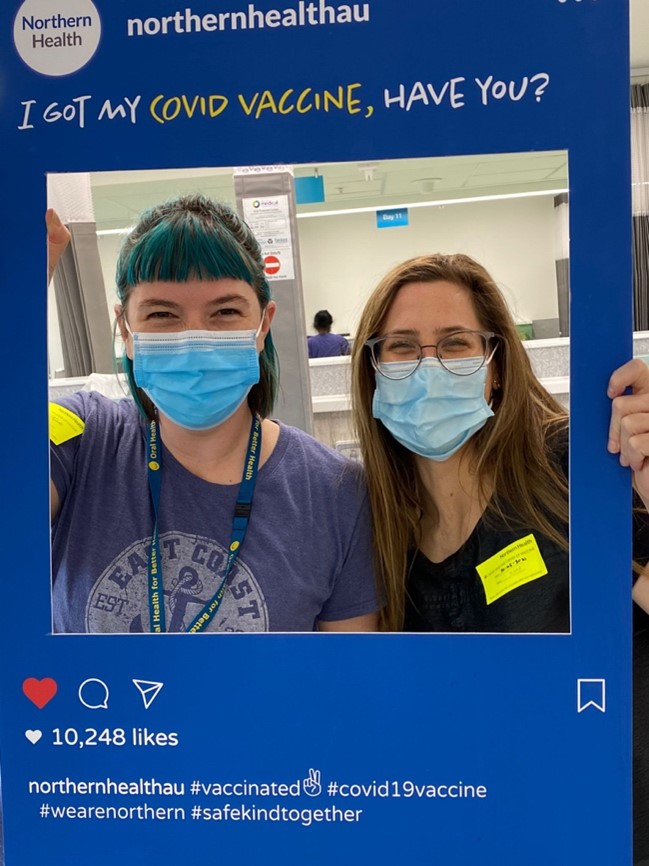
Matt and Katy from ADAVB have become Vaccine Clinical Champions! The Victorian Department of Health facilitated training from the Murdoch Children’s Research Institute (MCRI) on “How to build confidence in COVID-19 vaccines”.
We’ve received some great resources (see links below) and advice on how to effectively communicate about Australia’s COVID Vaccination program available below.
We were encouraged to share our personal stories, which you can read on my LinkedIn.
VOHA has been busy over the last few months having met with the Minister for Health Martin Foley MLA and other elected representatives.
VOHA talks with Victorian Minister
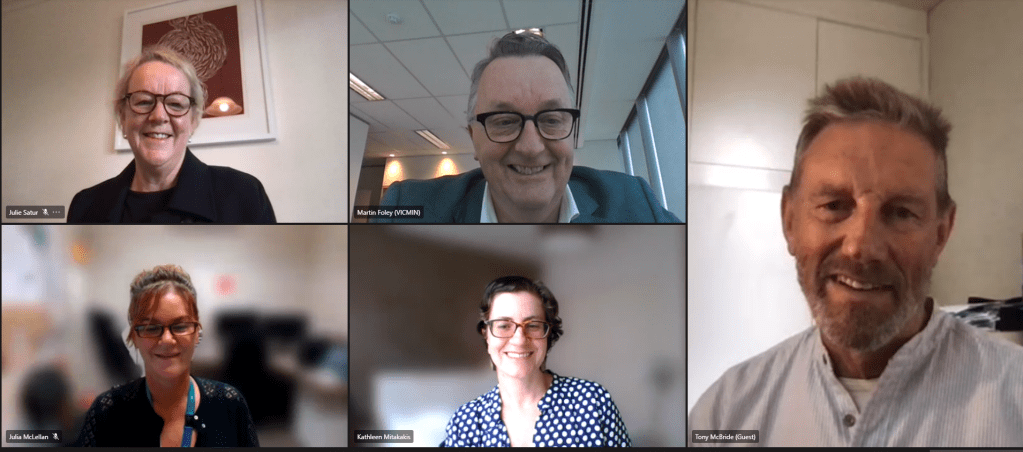
On the 25 March, VOHA met with the Minister for Health, Martin Foley, to share the latest information on the impact of the pandemic on oral health services, and especially the waiting times for future care. We reiterated the main points of VOHA’s Budget Submission, namely the need for a catch-up program and then regular significant increases in funding and a greater focus on prevention.
From L to R Top: Professor Julie Satur Melbourne Dental School, The hon. Martin Foley Minister for Health, andTony McBride VOHA Spokesperson From L to R Bottom: Julia McLellan Practice Manager oral health cohealth, and Kathleen Mitakakis Senior Project Officer Health Issues Centre
The Minister specifically asked us about the potential impact of any withdrawal of the National Partnership Agreement funding by the Commonwealth. In the following week, VOHA sought the views of a range of dental managers and provided the Minister with a range of frontline quotes about the current situation and the impact of a reduction in funding on consumers which can be found HERE.
The Minister has agreed to future meetings with VOHA.
VOHA meetings with MPs and DHSV
During February and March, VOHA also met with four Victorian MPs.
Two MPs were Chairs of Consultative Committees for proposed Community Hospitals. We talked about the need for oral health services to be part of the planned provision.
VOHA also emphasised that it saw local community dental services as the most appropriate and efficient managers of such oral health provision, given they were in most cases running clinics relatively close by and there were benefits for both consumers and services in running a combined service.
We had a productive meeting with Josh Bull MLA (Chair of the Consultative Committee for the Sunbury Community Hospital – probably the first to open). The Sunbury proposal is the only one of the ten proposed Community Hospitals that does not currently include dental chairs, and we advocated that it should be. Given the future population growth in the area, Josh expressed his desire to ensure adequate health infrastructure like this was developed in the area, and he subsequently wrote to the Minister for Health about this.
VOHA also met with Pauline Richards MLA who holds the corresponding position for Cranbourne Community Hospital and had a valuable exchange of information.
A VOHA delegation also had useful meetings with :
Louise Staley MLA, whose Ripon electorate covers Maryborough (the clinic with the longest waits in Victoria in June 2020) and East Grampians (waiting time about 24 months)
Tim Read MLA (Brunswick) who is the Health Spokesperson for the Greens, whose policies are very supportive of equitable access to dental care.
We recently asked VOHA Spokesperson Tony McBride about his oral health passion. Below is his response.
Why is oral health important to you?
It’s been a long term passion of mine. I was a community worker in the late 1980s at Kensington Community Health Centre, and oral health was one of the two main issues identified among community members during a consultation. With a group of local community members, we decided to do something about it!
So we decided to build an advocacy campaign around access to public dental care, and in particular to the need to establish a community dental clinic in Kensington/Flemington. From this, the Molar Energy Campaign (which was a play on a topical solar energy initiative) was born. It was evident to us that dental was often a forgotten issue, but poor oral health status is one of the most obvious indicators of poverty. Access to dental services is really about equity.
The campaign eventually became an alliance of 80 organisations statewide, and it contributed to the pressure to establish community dental clinics soon after.
I’ve had involvement on and off with this issue over the years. I was CEO at Health Issues Centre where it became evident that oral health was a key issue among consumers. In 2004 the Australian Dental Association Victoria Branch (ADAVB) reached out to us to form an alliance to advocate for better dental care. This soon became an alliance of ten associations/consumers – the Victorian Oral Health Alliance. After a few years, it ran out of steam. However in 2017, with chronic access issues to public oral health still continuing, the then new CEO of the ADAVB Matt Hopcraft, myself and a couple of others decided to relaunch VOHA (get the band back together) and we now have an active group of organisations sharing the same vision. I’ve been advocating for oral health on and off now for over three decades and through VOHA we are able to use our many contacts and lobbying potential to continue to advocate for a fairer oral health system on behalf of Victorians.
As a leading and innovative provider of public oral health services, Your Community Health implemented the Heal and Seal Clinic; a unique approach service delivery which:
Is built on the fundamental principles of value based healthcare
Is built around a team-based approach, where clinicians are empowered to work to their full scope of practice; ensuring the client is seen by the most appropriate clinician at the most appropriate time; for the most appropriate service.
Improves engagement with clients at the point of entry to the service, often at the point of enquiry for routine oral health care services.
Improves the timeliness of oral health education, dietary counselling and smoking cessation services; empowering clients to modify behaviours and/or seek additional support, earlier.
Provides a mechanism for the timely assessment and escalation of clinical care according to clinical or general health and wellbeing criteria.
Provides a mechanism for the timely provision of preventative and disease stabilisation services; whilst clients wait to access routine oral health care.
Provides a mechanism for high risk clients to be supported with follow-up preventative services; whilst clients wait to access routine oral health care.
The team based approach to service delivery alone has enabled Your Community Health to see more clients, reduce average waiting times and reduce the number of people waiting for care; whilst ensuring client care was undertaken by the most appropriate professional, in a timely manner.
Heal & Seal Clinic model:
An initial education session is scheduled at the point in time the client registers for general dental care. This is undertaken by an Oral Health Coach (Certificate IV Dental Assistant). Following this educational session, the client is offered an optional Heal & Seal Clinic appointment with an Oral Health Therapist; whereby examination, radiographs (as indicated) and an interim treatment plan developed to stabilise active dental caries.
Where active dental caries is noted, the following management options are provided:
Cavitated Carious Lesions: Application of Silver Diamine Fluoride (& potassium iodide precipitate where indicated) “Healing”, followed by “Sealing”/covering the lesion with an appropriate GIC. This increases the effectiveness of the SDF in addressing the caries and in most cases eliminates the need to re-apply every 6 months.
Non-Cavitated Carious Lesions: Application of Fluoride Varnish as indicated. This is followed by 6 monthly re-application by OHC (with Fluoride Certification) for high-risk clients, under the written prescription of the OHT; until such time the client comes off the general waiting list.
Diversion to Emergency Care (via triage) if urgent needs indicated (i.e. swelling, pain, etc.).
The aim is to stabilise the clients’ current level of oral health disease and work with them to prevent further disease and/or deterioration; whilst they wait for general care. It is envisaged that over-time, the complexity of care required in a general care setting would be significantly reduced; thus self-supporting continued resourcing and the capacity to see more people within a public dental setting.
This model is replicated within undergraduate student teaching clinics (DDS and BOH) run by Your Community Health in partnership with The University of Melbourne.
Acknowledgement: We take this opportunity to acknowledge Your Community Health for this information.






 Victorian Oral Health Alliance