The Victorian Oral Health Alliance (VOHA) is a group of the key professional, welfare and consumer organisations, and community dental services, committed to improving Victorians’ oral health and access to dental care.
A new book on history of the Victorian oral health sector is a must-read for anyone working in the sector or interested in health policy over the last 50 years.
It is titled Looking Back Looking Forward: Oral health in Victoria and Australia 1970 to 2022 and beyond, and has been researched and written by two very experienced dentists/oral health policy managers, John Rogers and Jamie Robertson.
This is a must-read for anyone involved in oral health care and policy development. You can download for free at https://doi.org/10.26188/23721969.v1
But I recommend that every service delivery organisation purchases one for their staff and managers, both to increase awareness of the history and context of current care funding and approaches, but also as a resource for submission writing and general comms.
VOHA was proud to host a vibrant and inspiring breakfast at Parliament House in Victoria, to celebrate World Oral Health Day, bringing together leaders across government, public health, and the broad variety of advocates across our VOHA membership.
We were honoured to welcome:
Hon. Mary-Anne Thomas, Minister of Health
Ms Georgie Crozier, Shadow Minister of Health
Dr Sarah Mansfield, Greens Spokesperson for Health
alongside representatives from Oral Health Victoria, the Department of Health Victoria, and a wide range of VOHA member organisations.
The theme for WOHD 2026, “A Happy Mouth… is a Happy Life,” reinforces the vital role oral health plays at every stage of life.
Opening Remarks
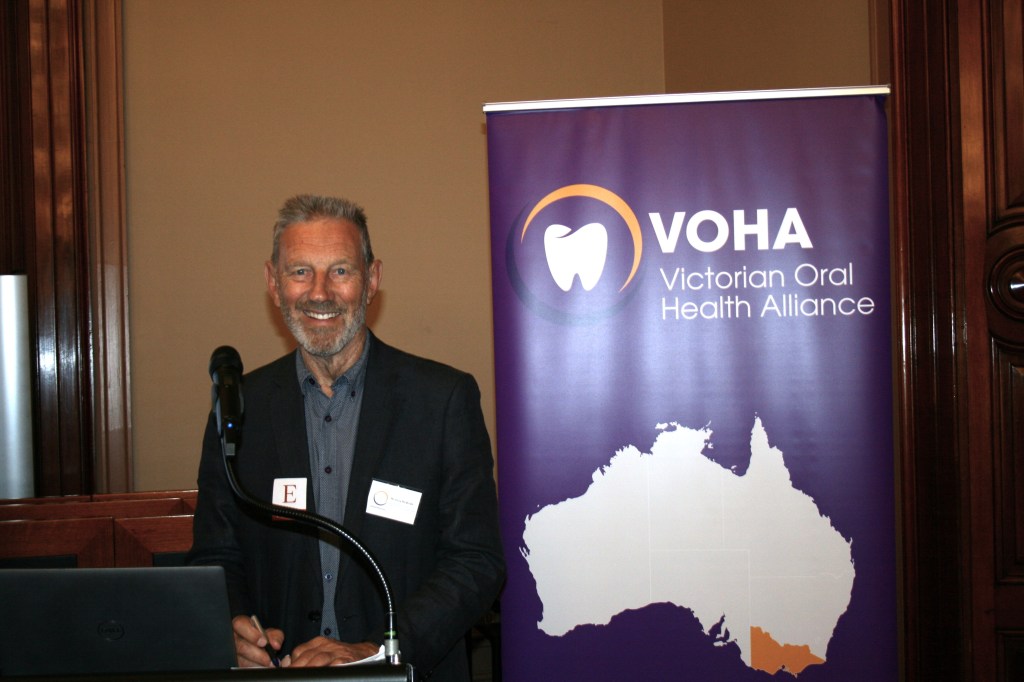
Our MC for the event, VOHA Spokesperson Tony McBride, opened the morning by welcoming guests and acknowledging the importance of nonpartisan recognition and support for oral health in Victoria. He emphasised VOHA’s commitment to working collaboratively to help shape a stronger, more equitable oral health future for all Victorians.
Pictured above: Mr Tony McBride (VOHA Spokesperson)
Key Speakers & Highlights
Hon. Mary-Anne Thomas – Minister for Health
The Minister reflected on the importance of investing early by supporting “the little people”, acknowledging the Government’s commitment to early intervention through programs such as Smiles 4 Miles, Healthy Smiles Healthy Families, and Smile Squad.
In line with the World Oral Health Day theme, the Minister acknowledged that oral health is integral at every stage of life and recognised the well established connections between oral health and general health outcomes. The Minister also mentioned the importance of water fluoridation and the Victorian government’s ongoing commitment to always recognise evidence, science and expert advice when shaping policy for Victorian’s health. She reinforced that oral health is essential at every stage of life, noting the well‑established links between oral health and general health.
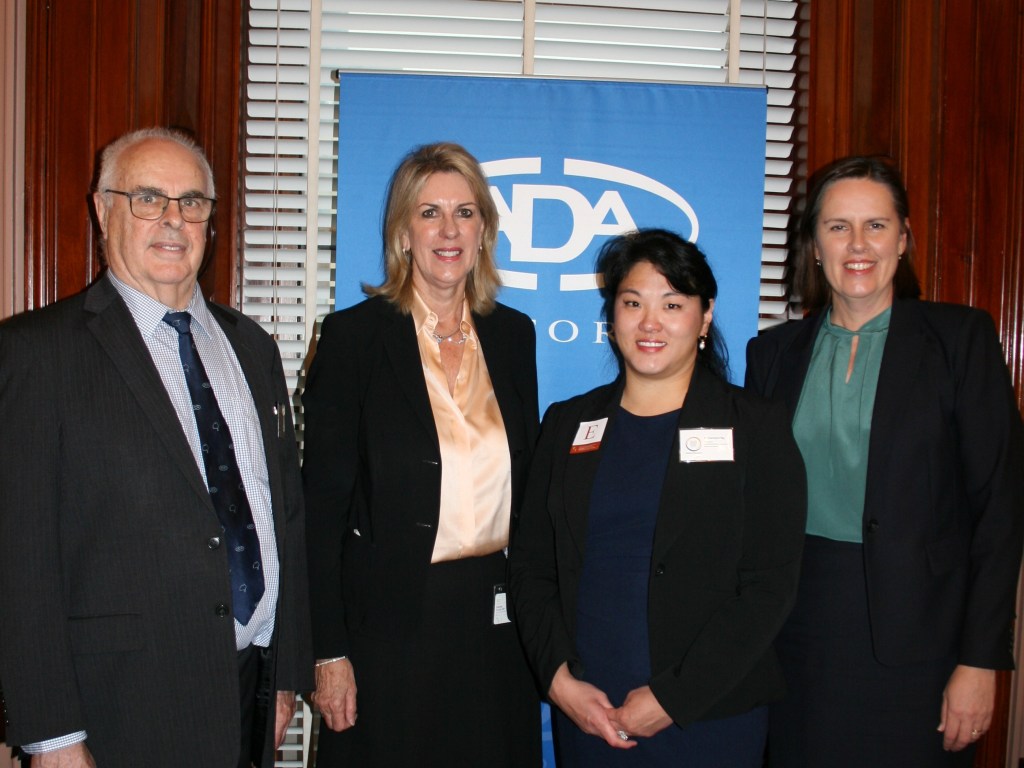
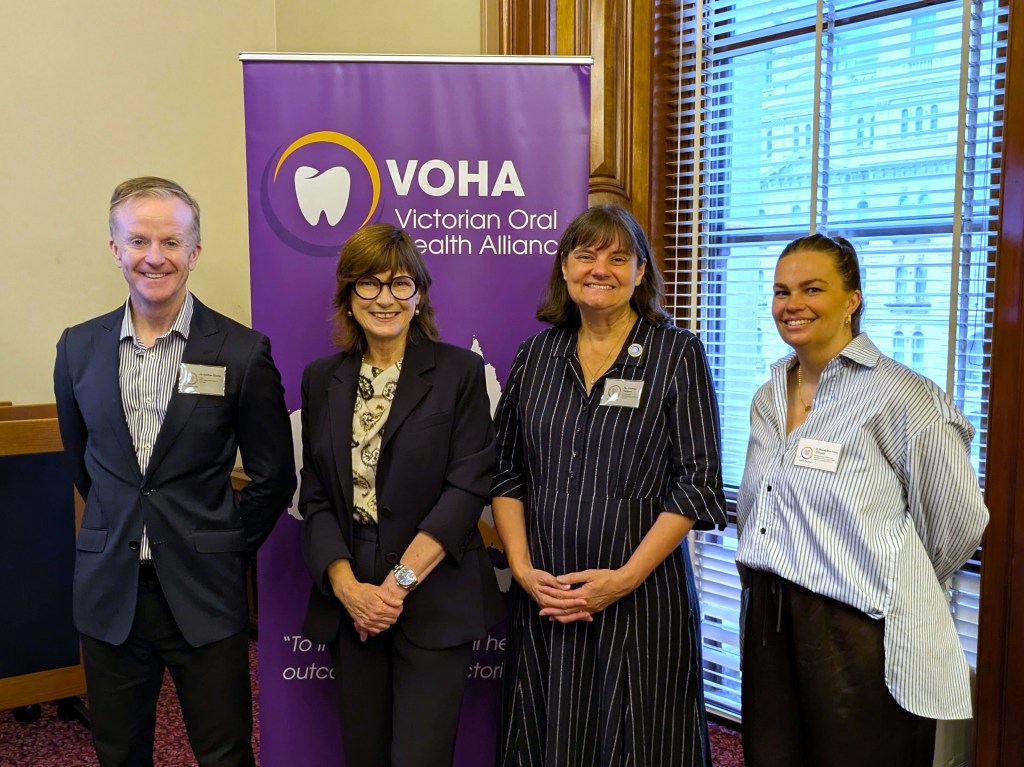
Pictured above (left to right): A/Prof Neil Hewson (Interim CEO, ADAVB), Hon. Mary-Anne Thomas (Minister of Health, Victoria) and Dr Carolyn Ng (President, ADAVB)
Georgie Crozier – Shadow Minister for Health
Georgie Crozier reinforced the vital role that the oral health sector plays in Victoria’s broader health landscape. She noted that our advocacy is necessary and valued, and assured attendees that the hard work of practitioners, community organisations, and advocates is not going unnoticed, and is deeply appreciated. Georgie also focused on the importance of prevention and how the leading cause of hospital admissions for under 10s is due to poor oral health and recognises that more work needs to be done in this space.
Pictured above (left to right): A/Prof Neil Hewson (Interim CEO, ADAVB), Ms Georgie Crozier (Shadow Minister of Health, Victoria), Dr Carolyn Ng (President, ADAVB) and Ms Gaelle Broad (Member of Legislative Council, Northern Victoria)
Dr Sarah Mansfield – Greens Spokesperson for Health
Dr Mansfield addressed one of the systemic issues in Victoria’s oral health landscape — the way the current health system still treats the mouth as separate from the body. She stressed the need to “put teeth back into the body” in policy, planning, and funding discussions. Dr Mansfield also highlighted priority areas including workforce capacity, salary structures, and the need for sustainable and expanded funding to meet community needs. Acknowledgement that there is still a high number of preventable dental hospitalisations across the age spectrum, noting 17,000 admissions due to dental-related disease in 2021.
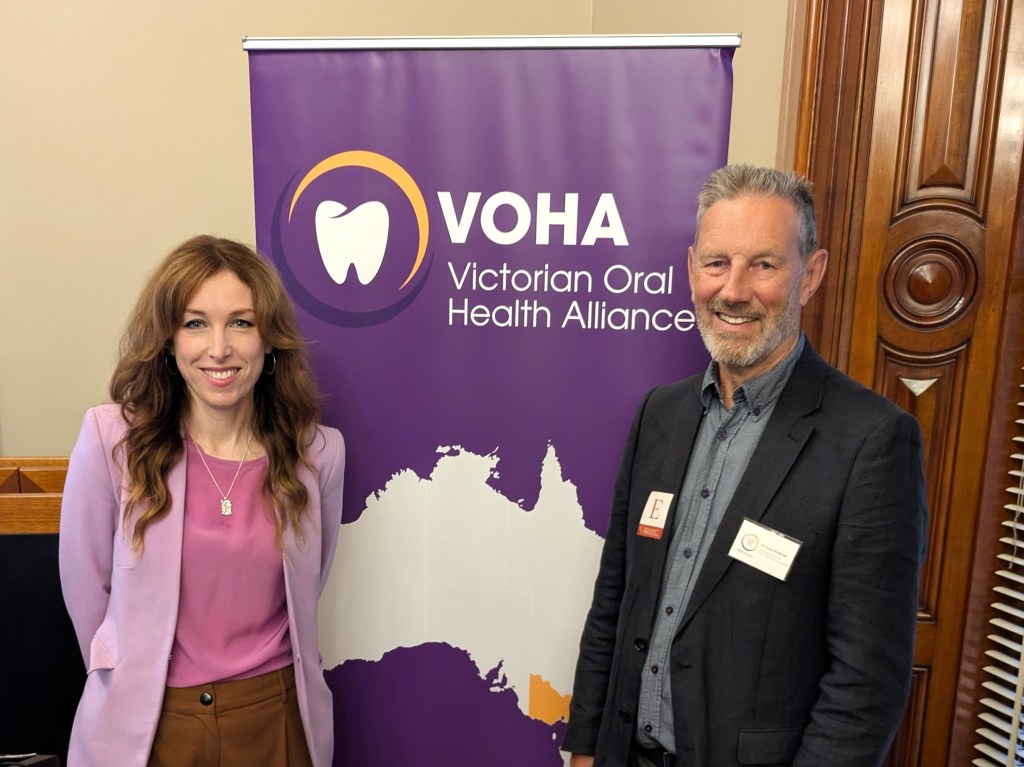
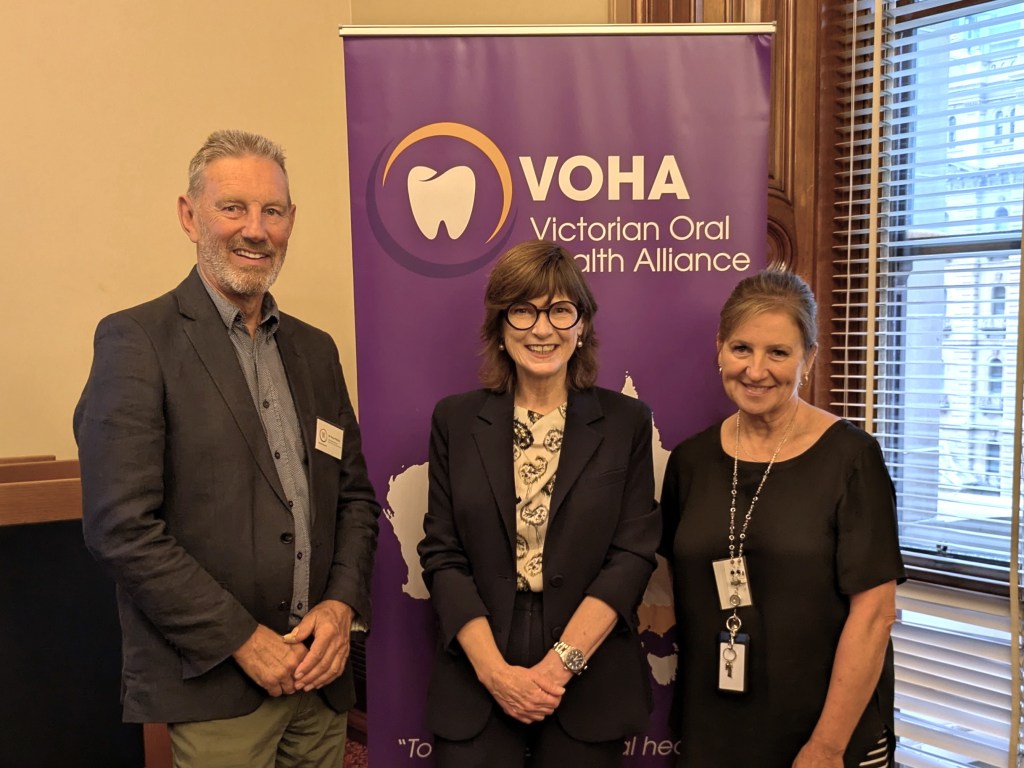
Pictured above (left to right): Dr Sarah Mansfield (Greens Spokesperson for Health, Victoria) and Mr Tony McBride (Spokesperson, VOHA)
Dr Tori Carter – Dentist & Public Oral Health Advocate
Dr Tori Carter (Vic and Tas State Co-ordinator for the ADA Dental Health Foundation) shared compelling realworld examples from her clinical experience as the Senior Dentist in a community health clinic in Melbourne, illustrating how poor oral health is shaped by access barriers, social stigma, and entrenched inequities. She reflected on the undeniable links between oral health and general health, calling for better alignment across services, policy, and community supports to improve outcomes for all Victorians.
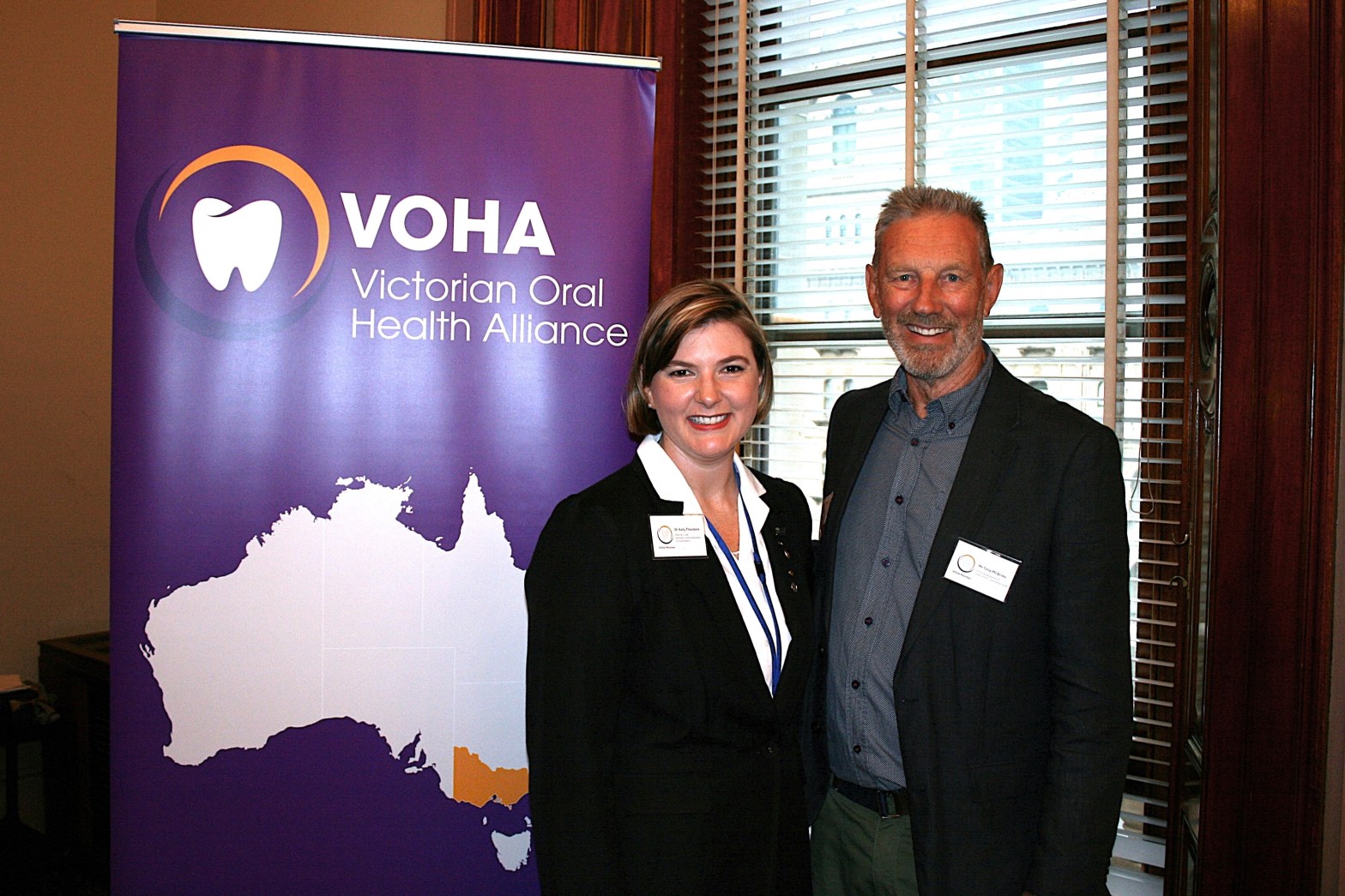
Pictured above (left to right): Dr Katy Theodore (Advocacy Lead, ADAVB), Dr Tori Carter (VIC State Coordinator, ADA Dental Health Foundation) and Dr Clare Lin (Director of Policy and Population Health, Oral Health Victoria)
Collaboration Across the Sector
VOHA extends special thanks to:
the Australian Dental Association Victorian Branch (ADAVB) for their partnership and support in delivering this event, and
the wide breadth of VOHA member organisations and sponsors, whose ongoing commitment makes events like this possible.
Today’s strong cross‑sector presence reflected a shared commitment to building a healthier, more equitable future for Victorian communities.
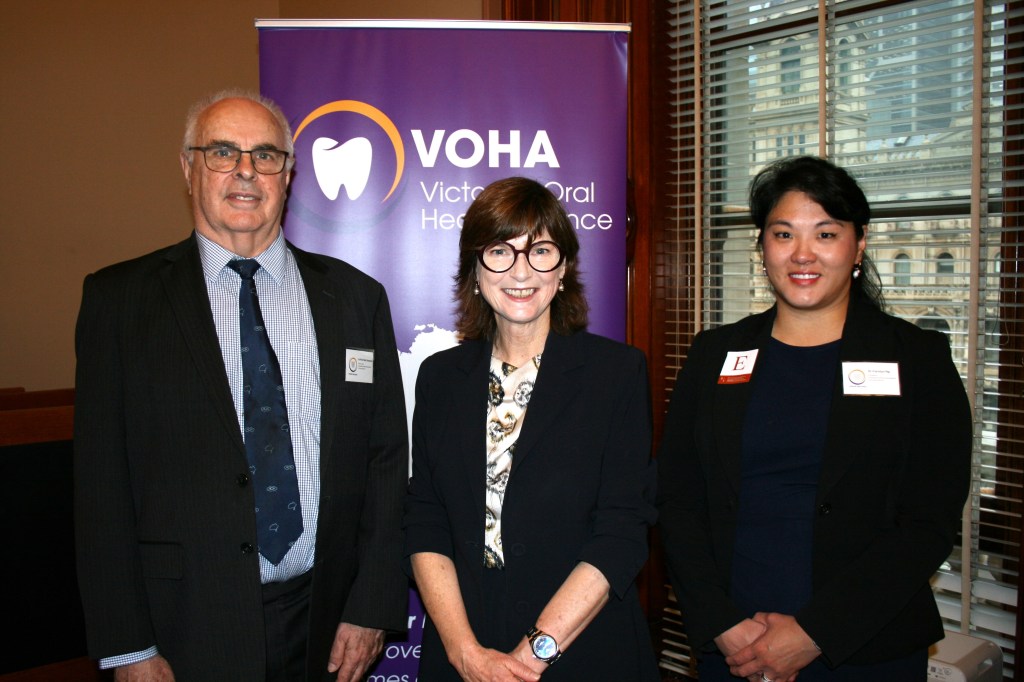
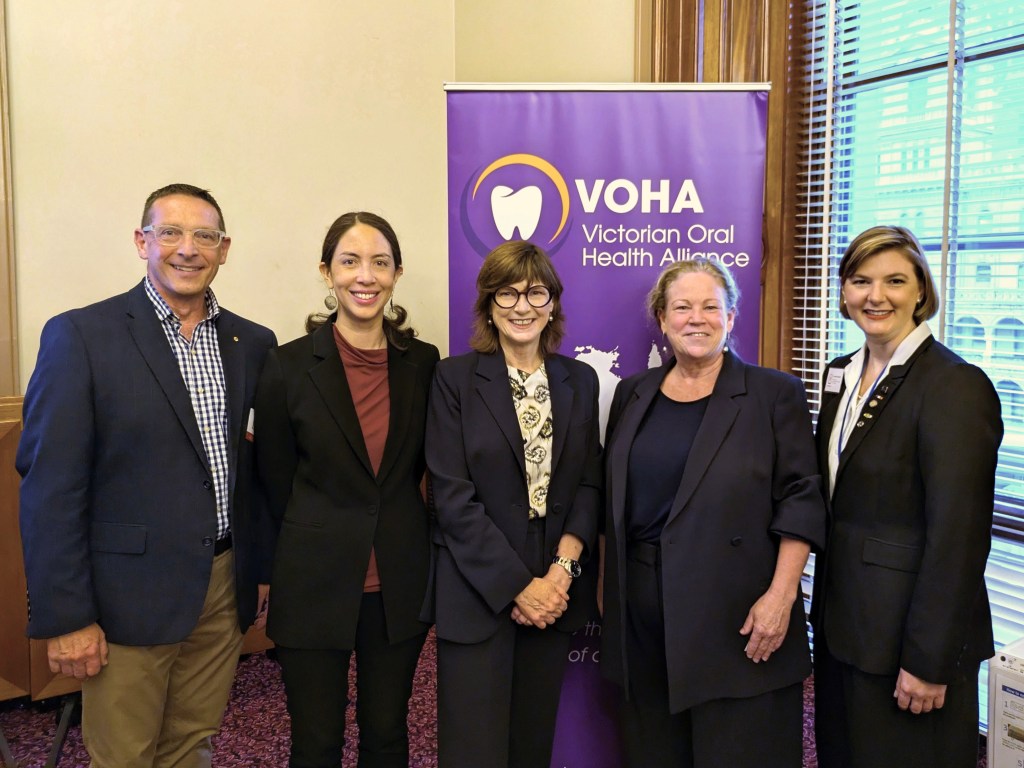
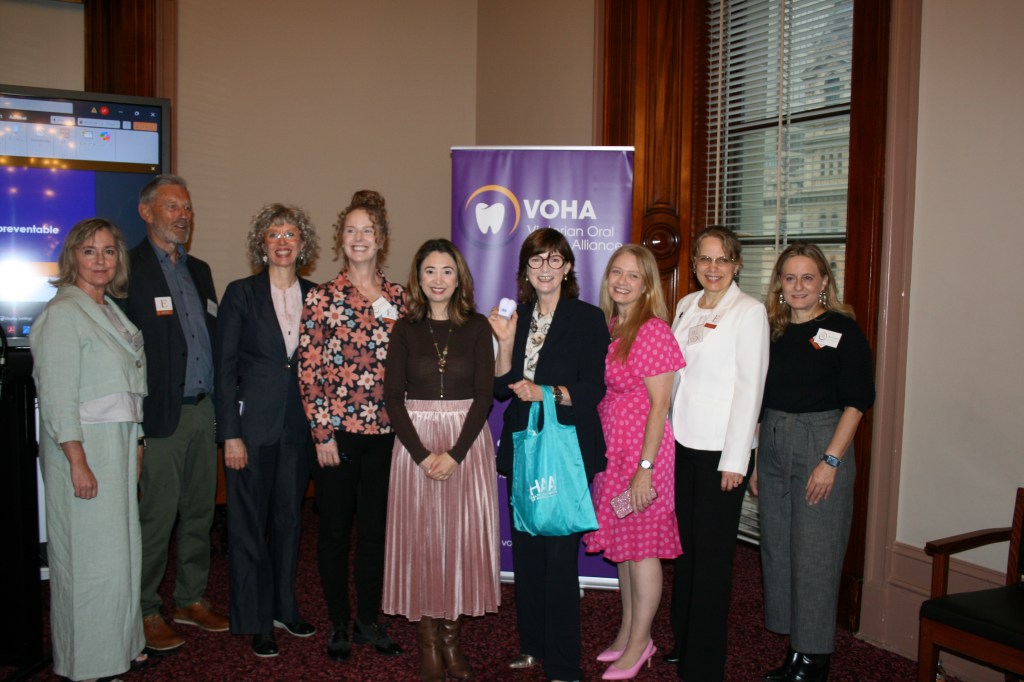
Pictured above (left to right): Dr Werner Bischof (Chief Oral Health Advisor, Oral Health Victoria), Dr Clare Lin (Dr Clare Lin (Director of Policy and Population Health, Oral Health Victoria)), Hon. Mary-Anne Thomas (Minister of Health, Victoria), Ms Susan McKee (CEO, Oral Health Victoria) and Dr Katy Theodore (Advocacy Lead, ADAVB)
Pictured above (left to right): A/Prof Rachel Martin (Director, Australian Network for Integration of Oral Health), Mr Tony McBride (Spokesperson, VOHA), Ms Nina Taylor (MLA, Albert Park), Ms Cate Grindlay (Executive Director Integrated & Primary Care, Your Community Health), Ms Kat Theophanous (MLA, Northcote), Hon. Mary-Anne Thomas (Minister of Health, Victoria), Ms Vicki Doherty (Executive Director Medical and Oral Health Services, Latrobe Community Health), Dr Felicia Valianatos (Manager Oral Health, Latrobe Community Health Services) and Ms Liz Chondros (CEO, Your Community Health)
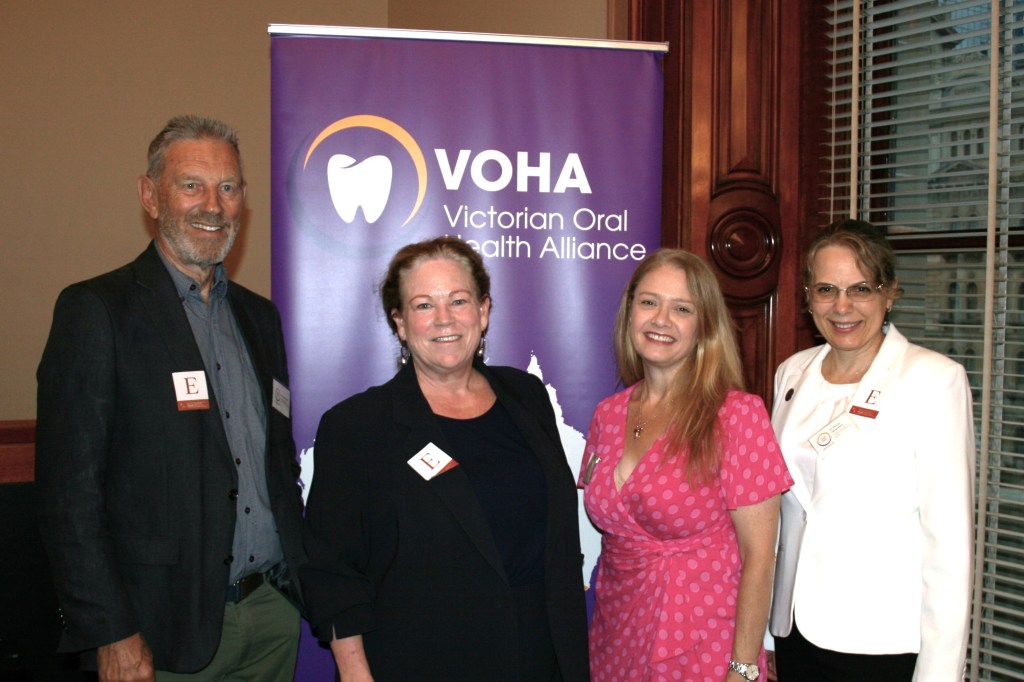
Pictured above (left to right): Mr Nathan Clarke (CEO, Oral Health Association Australia), Hon. Mary-Anne Thomas (Minister of Health, Victoria), Mrs Cathryn Carboon (VIC TAS Co-Chair, Oral Health Association of Australia) and Dr Stacey Bracksley-O’Grady (Research Fellow, Violet Vines Marshman Centre for Rural Health Research, La Trobe Rural Health School)
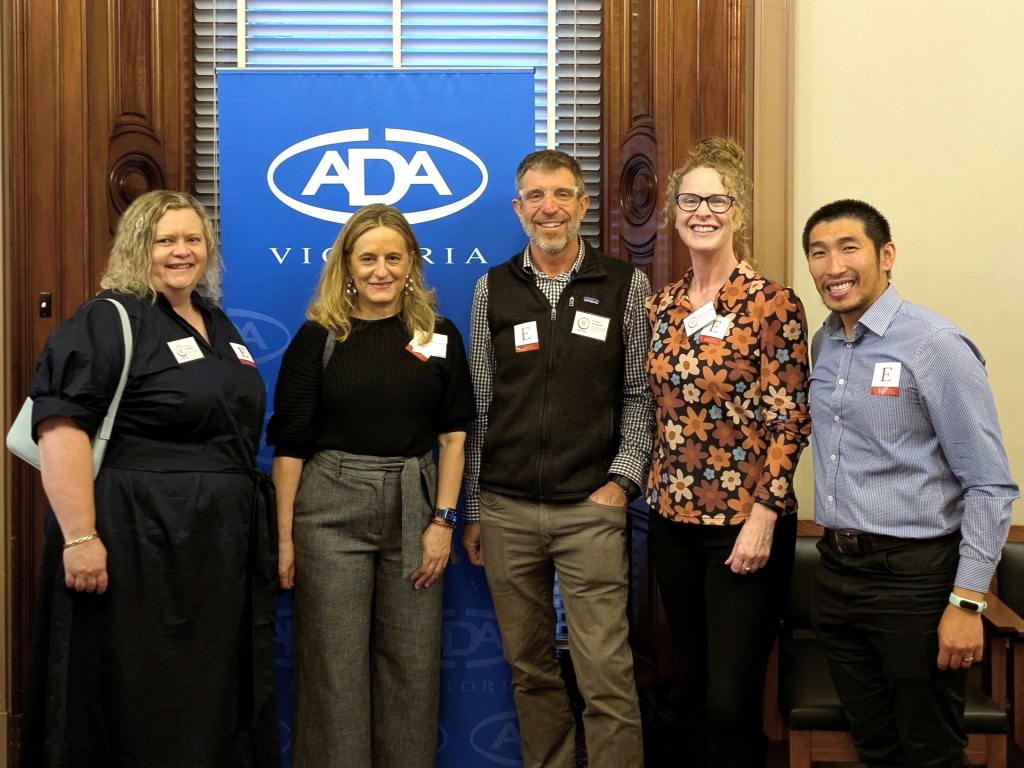
Pictured above (left to right): Ms Sarah Woodburn (Director of Community Services, East Grampians Health Service), Ms Elizabeth Chondros (CEO, Your Community Health), Mr Scott Drummond (Head of Policy and Practice, Victorian Alcohol and Drug Association), Ms Cate Grindlay (Executive Director Integrated & Primary Care, Your Community Health) and Mr Tan Nguyen (Spokesperson, National Oral Health Alliance)
Pictured Left to Right: Mr Tony McBride (Spokesperson, VOHA), Ms Susan McKee (CEO, Oral Health Victoria), Ms Vicki Doherty (Executive Director Medical and Oral Health Services, Latrobe Community Health) and Dr Felicia Valianatos (Manager Oral Health, Latrobe Community Health Services)
Pictured Left to Right: Dr Tori Carter (VIC State Coordinator, ADA Dental Health Foundation) and Ms Erin Taylor (Executive Director – Community Health, Department of Health Victoria)
Pictured Left to Right: Mr Tony McBride (Spokesperson, VOHA), Hon. Mary-Anne Thomas (Minister of Health, Victoria) and Ms Natalie Smyth (Senior Manager Dental Services, IPC Health)
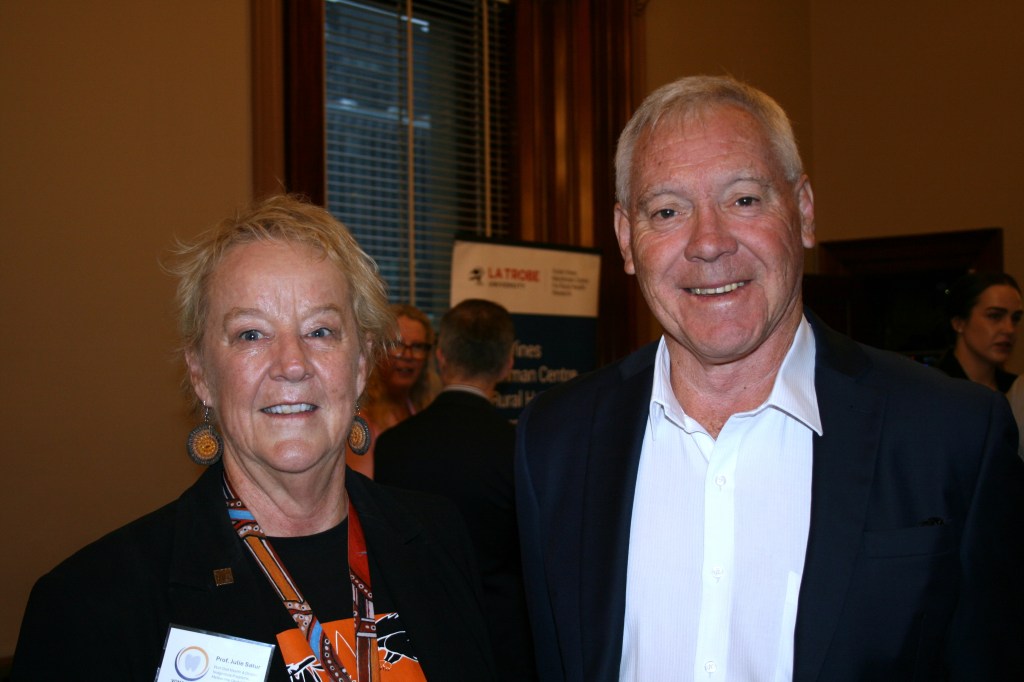
Pictured Left to Right: Prof. Julie Satur (Professor of Oral Health, Director of Engagement and Indigenous Programs, Melbourne Dental School) and Mr Stephen McGhie (MLA, Melton)
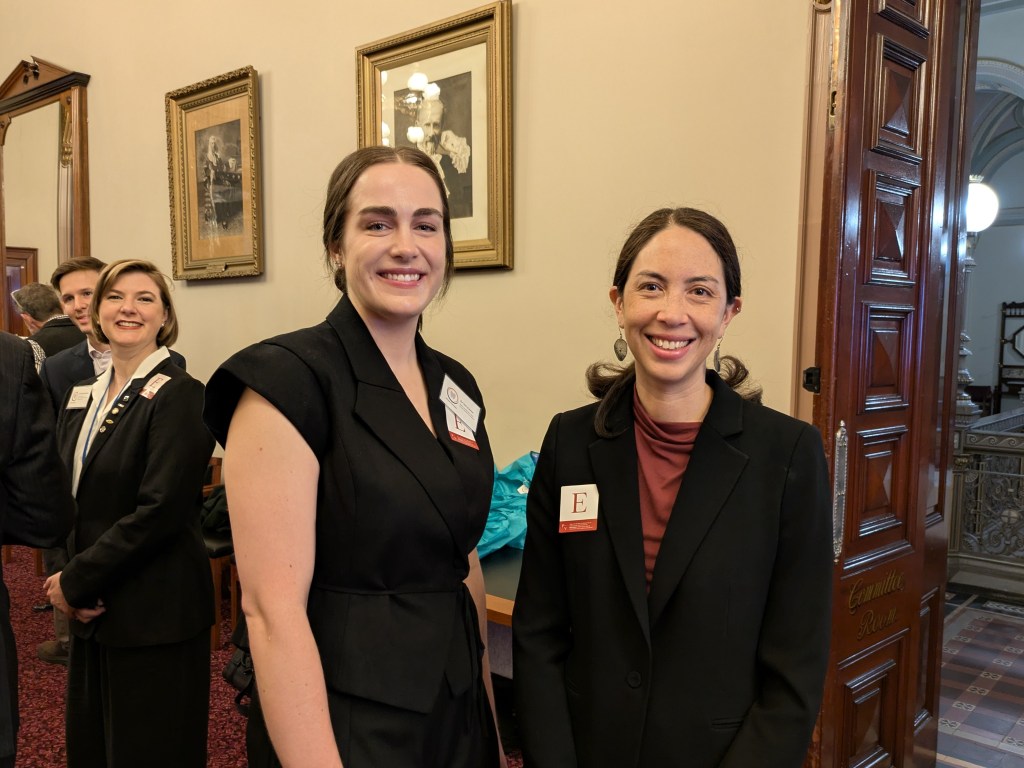
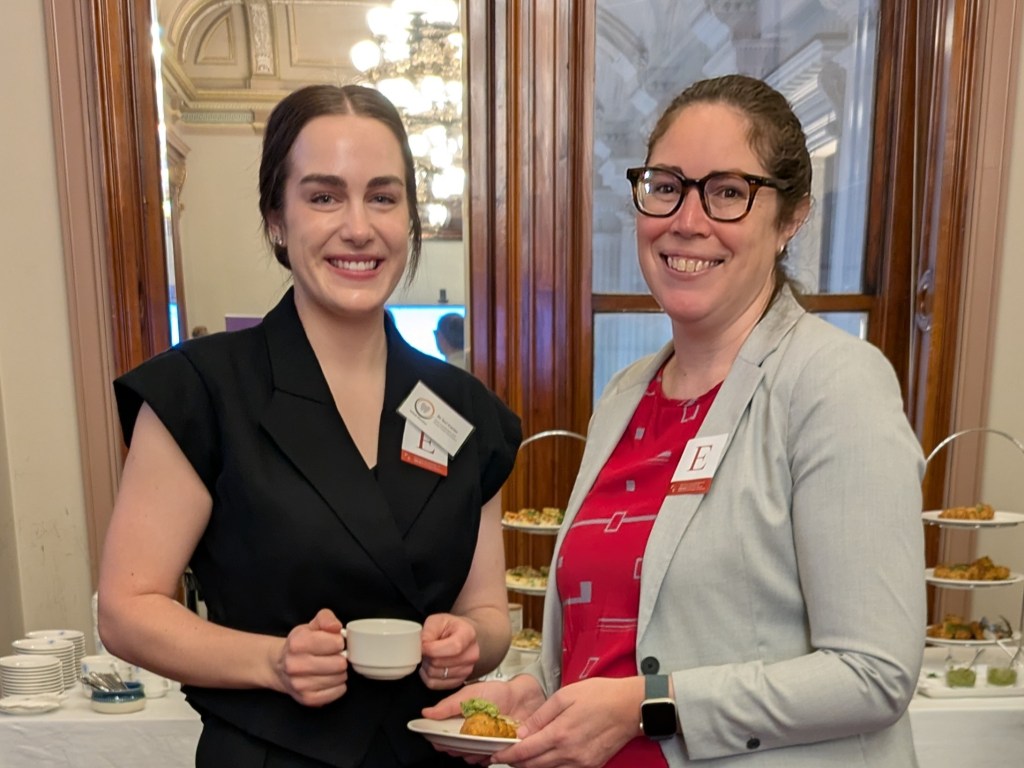
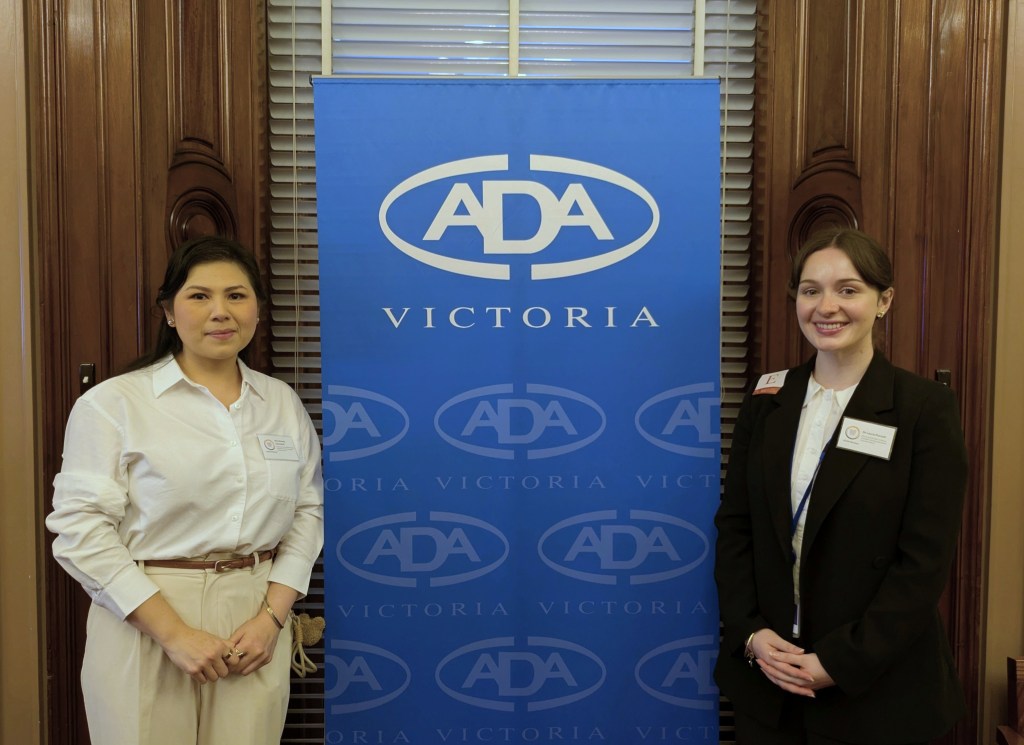
Pictured above (left to right): Mrs Shierly Lianawati (Advocacy Administrative Officer, ADAVB) and Dr Laura Purcell (Advocacy and Evidence Officer, ADAVB)
The Victorian Oral Health Alliance (VOHA) is calling for targeted, evidence-based investment in oral health in the 2026–27 State Budget to address deepening inequities and reduce long-term costs to the health system.
Despite repeated commitments to public health, funding for public dental services in Victoria continues to fall short. Real per-capita investment has declined by 32% since 2019–20, leaving over 1.2 million eligible adults without timely access to care. Wait times now exceed three years in some regions, placing Victoria among the worst-performing states nationally.
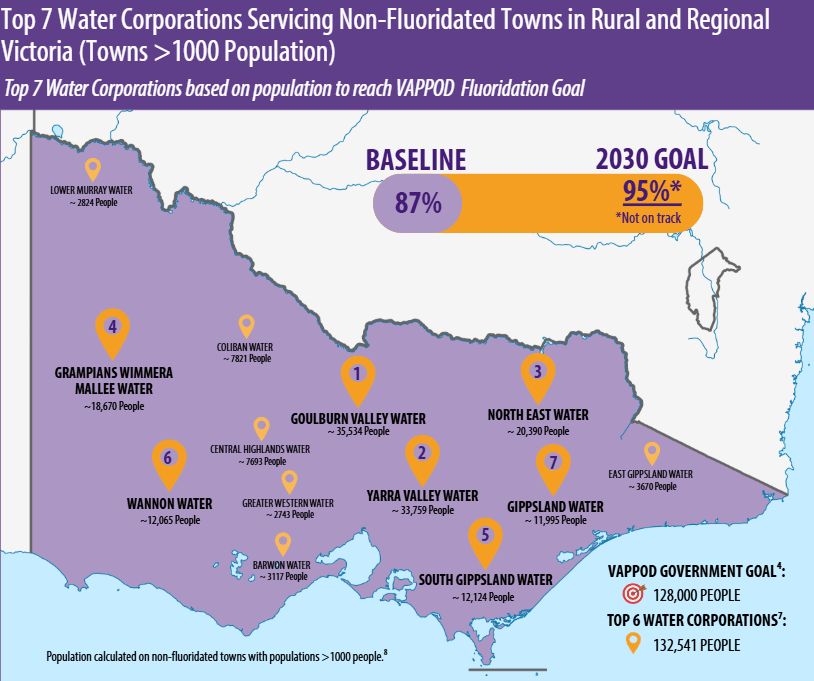
VOHA urges the Victorian Government to prioritise prevention and early intervention, especially for children in rural, non-fluoridated, and Aboriginal communities, where oral health outcomes are poorest. These strategic investments will reduce future demand, improve equity, and deliver significant cost savings.
Key Budget Recommendations
Expand Water Fluoridation Invest $4.5 million per year for four years to introduce fluoridation infrastructure in three high-need water catchments annually. This proven public health measure could save Victoria $1 billion over 25 years, reduce preventable hospitalisations, and improve lifelong oral health.
Fund Local Oral Health Promotion Officers Allocate $2 million annually to support 20 part-time Oral Health Promotion Officers (0.6 FTE) in high-need rural municipalities, including Aboriginal Community Controlled Health Services. These roles will build local capacity, promote healthy habits, and increase uptake of the Child Dental Benefits Schedule.
Launch a Statewide Oral Health Campaign Invest $3 million (one-off) in a culturally inclusive public awareness campaign—similar to “Slip, Slop, Slap”—to promote preventive oral health practices and inform families about available dental benefits.
Why It Matters
Prevention is cost-effective: Early intervention reduces the need for expensive treatments and hospitalisations.
Equity must be addressed: Rural and Indigenous communities continue to experience the worst oral health outcomes.
Children are missing out: Pre-school children are not covered by Smile Squad, despite being at critical risk for early childhood caries.
Local leadership is key: Councils and community health services are well-placed to lead oral health initiatives with the right support.
VOHA stands ready to work with government, parliamentarians, and stakeholders to design and implement these proposals. Together, we can build a healthier, fairer future for all Victorians.
The bottom line is that funding for public oral health care and broad preventive measures continues to remain, at best, stagnant in real terms. While total funding is increased by 2.3%, the decline in funding per eligible Victorian continues downwards – a 32% reduction in real terms since 2019-20. Again, the overall level of funding is only enough to treat every eligible adult on average once every seven and a half years, clinically a desperately inadequate level. Lastly, there appears to be no uplift in preventive measures, especially addressing the lack of access to water fluoridation in many towns in rural Victoria.
The most disadvantaged will continue to have the lowest access to oral health care, and the hospitalisation rates of children for potentially preventable conditions will undoubtedly continue to be unacceptably high, and on a rising trend.
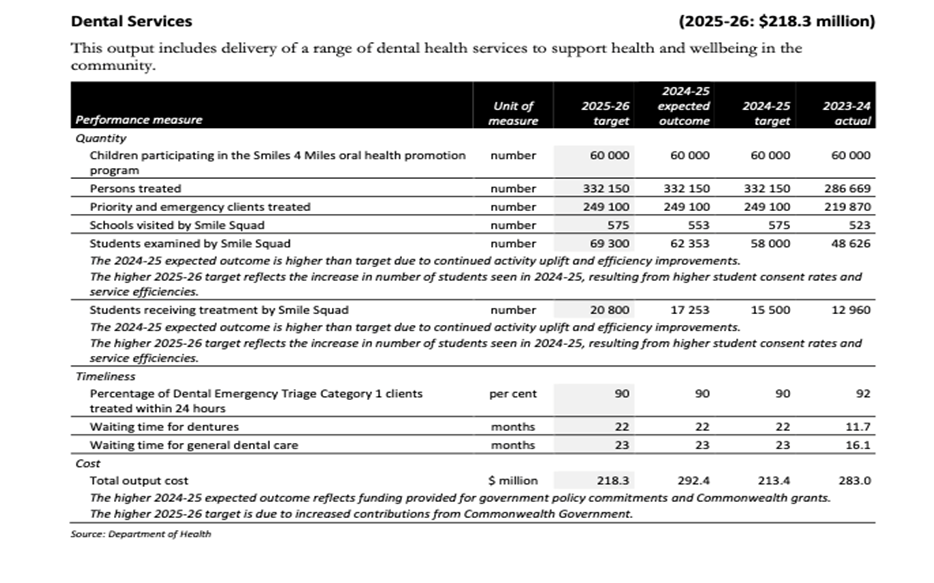
The 2025-26 Budget papers allocate $218.3m of State funding to dental funding next year, an increase of 2.3%, although this is less than actual costs of care.
In addition, there is an estimated annual Federal allocation of about $27m – a figure unchanged for many years. This gives a total of about $245m.
Crucially, while this is only a very slight decrease in real terms from last year, this level of funding continues to represent a huge decrease from the pre-covid era, a 35% reduction per client in CPI adjusted terms, but with little change in expected targets of number of people seen – 332,000 people (Royal Dental Hospital Melbourne + other community agencies) out of 2.45 million Victorians eligible for public sector care.
There is an as yet unexplained $50m reported as being spent in this current financial year but it does not continue into 2025-26.
Waiting time benchmarks remains stuck at 22 or 23 months, although the published actual averages for general clients are much lower. At June 2025 the available data shows over half (52.73%) of all clients on the general list (non-urgent or priority) waited longer than 12 months (although VOHA believes this is an under-estimate of people’s actual wait times). However, there is wide variation in the averages – Victorians in some areas have to wait much, much longer, e.g. 36.4 months at Sunraysia Community Health Services, 25.8 months at Latrobe Community Health Service, 25 months in West Wimmera Health Service, and about 50% of the eligible population come under the priority access policy and are able to access services without waiting.
The current highly constrained funding regime has negative implications. While the system rightly provides timely care for priority groups, urgent care (which often reflects lack of earlier preventive care) takes up high levels of treatment time. Thus, on average services are only left with about 65% of their capacity to address the long waiting lists for general care.
Smile Squad, which is predominantly funded by the Commonwealth’s Child Dental Benefits Scheme, is expected to visit 575 schools this year (up from 553 this year) and see and treat more children – 69,300, an 11% increase. Low-fee independent schools are meant to become eligible this year but exactly when is not known. As commenced last year, all secondary schools will only be visited every two years, not annually. VOHA remains concerned that the Smile Squad services are unable to be accessed by those who would most benefit from the service (the program is affected by ‘The Inverse Care Law’).
FUNDING PER PERSON COMPARISON 2025-26 with 2019/20
Year
Budget allocation
Allocation adjusted to 2025 dollars*
Target persons
Funding per client in 2025 $
% change from 2019-20
2019-20
$294m
$354m
324k
$1,093
2025-26 with Commonwealth NPA$
$245m
$245m
332k
$738
-32%
*Adjusted by RBA CPI rates ** Assumes $27m Commonwealth FFA
Targets and funding from Budget Paper #3
FYI the only Departmental Objectives relating to oral health is around ‘children aged 0-9 years old who have been hospitalised for dental conditions’ (i.e. to reduce this rate). The Budget makes no further mention of this, presumably as it is an operational matter.
Unclear areas of Budget and funding
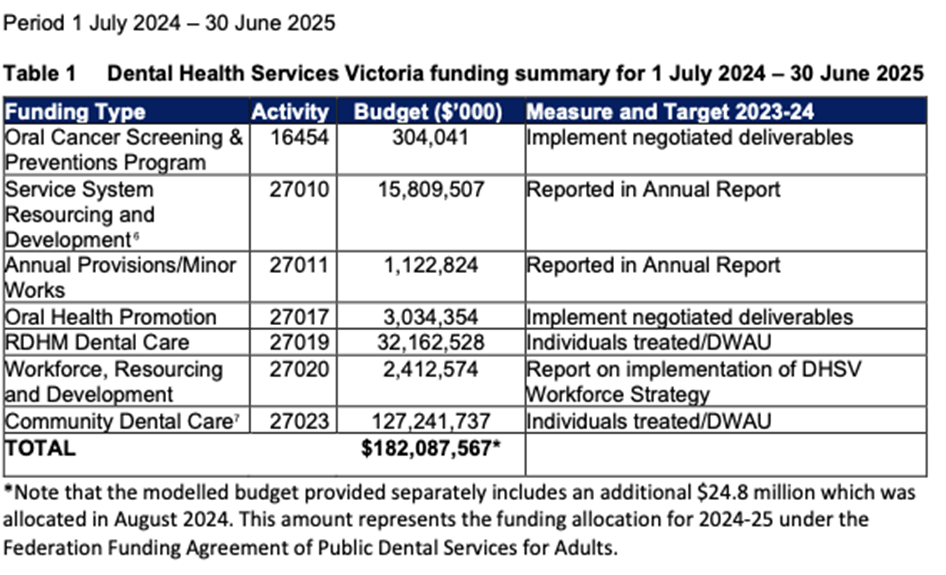
It is not at all transparent how the reported expenditure in the Budget papers matches up with the Funding Agreement that the Department of Health has with DHSV.
As noted above there was $238m effectively allocated in the combined State/Federal Budgets this year to dental care. However, according to DHSV’s 2024-25 Statement of Priorities (below) signed by DHSV and the Minister[1], DHSV will only receive $182m this current financial year (see below). Adding in last year’s $25m Commonwealth money and a similar amount for 2024-25 would bring the total to $232m.
This is a far cry from the $292m expected expenditure described in the Budget for this year. It is not at all clear to VOHA yet where this extra $54m was spent. Whatever it was, it has not flowed into the coming year. We will explore further but it remains true that there is considerable lack of transparency about dental funding in Victoria.
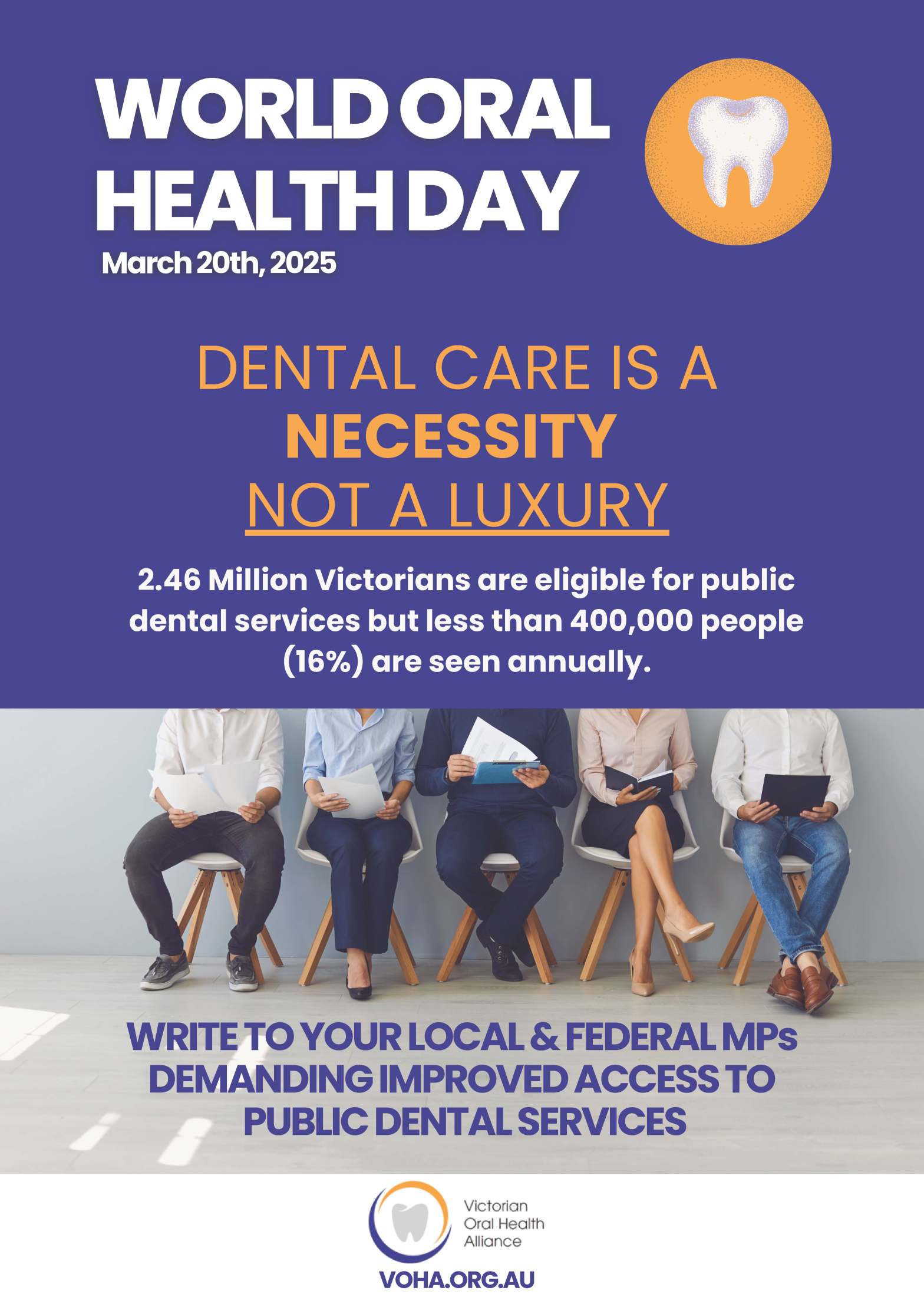
Many Victorians Still Waiting, Waiting, Waiting for Timely Access to Public Dental Care on World Oral Health Day
“With no action yet by the Federal Government to extend Medicare to oral health care, and the Victorian Government funding enabling less than 20% of eligible Victorians to access timely public care, the Victorian Oral Health Alliance (VOHA – voha.org.au) marks World Oral Health Day again with continued exasperation”, says Tony McBride, Spokesperson for over 20 professional, service and community organisations passionate about oral care.
Shockingly, the Australian Institute for Health and Welfare data indicates that annually 7,400 Victorian children aged 0-9 years require hospital admissions (often involving general anaesthesia) for potentially preventable conditions. These admissions negatively impact those children, their families and hospitals. Almost 70,000 eligible Victorians were on waiting lists at December 2024. Published average waiting times for general public dental treatment was still way too long at 12.6 months, yet in many areas they are much, much longer: 39 months at Sunraysia Community Health, West Wimmera 34, Latrobe 26, Swan Hill 25, Central Gippsland 20, Merri Health 22, healthability (NE metro) 19 and Monash Health 18. And of course, 50% of people wait longer than the average time. This means tens of thousands of Victorians, especially in rural Victoria, are being left in pain and discomfort and without access to essential, timely oral healthcare.
“No one should have to wait years for basic care, especially so in rural Victoria where access to services is more restricted and broader social determinants of health are typically more impactful,” said Associate Professor Virginia Dickson-Swift, Principal Research Fellow at the Violet Vines Marshman Centre for Rural Health Research, La Trobe University. “The government’s investment in the school-based dental van program, Smile Squad, won’t prevent these hospitalisations because by the time these kids get to school, sadly, it’s too late,” commented Ilsa Hampton, CEO, Australian Dental Association Victorian Branch.
“Oral health is a necessity — it’s not a luxury. The longer people are forced to wait, the worse their conditions become (preventable infections, difficulties in eating and speaking), often resulting in more complex and costly treatment down the track,” commented Tony McBride, VOHA Spokesperson. This World Oral Health Day, VOHA calls on all Victorians to take action by writing to their local MP and demanding greater public investment in dental services.
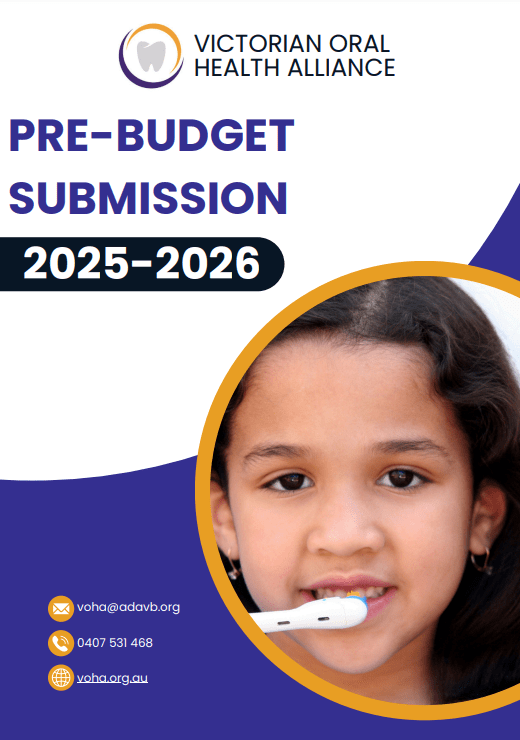
Oral health is an essential part of overall health and wellbeing, yet many Victorians continue to face significant barriers to accessing timely and affordable dental care. To address these challenges, the Victorian Oral Health Alliance (VOHA) has developed its 2025-2026 Pre-Budget Submission, calling on the Victorian Government to prioritise increased funding and targeted initiatives that improve oral health outcomes across the state.
The submission highlights critical issues, including the need for:
Expanded water fluoridation
Greater investment in the public oral health workforce
Enhanced funding for preventative care programs
Renewed focus on reducing sugar-sweetened beverage consumption
As we approach the next state budget, VOHA’s recommendations offer a roadmap to ensuring all Victorians can access the oral healthcare they need to live healthy, fulfilling lives.
Click Here to Download a PDF Copy of the Submission
With increasing media focus on Australians’ dental and oral health, VOHA presents a handpicked selection of local articles that highlight key areas for potential health system improvements and opportunities to shape a brighter future for Victorian dental care. Please note, the opinions expressed in these articles do not necessarily reflect VOHA’s positions but provide valuable insights for policy discussion
Regional Children Wait in Pain for Urgent Dental Care
By ABC News
Sep 13, 2024
Across regional Australia, children are enduring extended waits for urgent dental care, leaving many in pain as the system struggles to cope. This article highlights the growing crisis and its implications for young Australians and their families.
Australians fork out much more on dental care than any other kind of health care. Which is why increasingly, people are delaying or skipping dental care, and 27% of kids aged between 5 and 10 have untreated decayed or missing teeth.
So should, or could dental care be brought under the Medicare umbrella, and what might this cost?
Guests:
Peter Breadon (Program Director for Health and Aged Care at the Grattan Institute)
Dr Angie Nisson (Board Member of the Australian Dental Association and Clinical Director of Oral Health in Northern NSW)
Dr Elizabeth Deveny (CEO of the Consumers Health Forum of Australia)
Explore the critical need to integrate dental care into Medicare to address inequities in oral health. Tim Woodruff discusses the social, economic, and health implications of overlooking dental care as an essential health service.
Oral Diseases Cost the World $710 Billion Annually
By Bite Magazine
Nov 20, 2024
A groundbreaking study has revealed that oral diseases are costing the global economy $710 billion annually. The report sheds light on the widespread impact of oral health issues and calls for urgent reforms in healthcare systems worldwide.
Hospitalisations for Dental Conditions on the Rise
By ABC News
Oct 4, 2024
A new oral health report reveals a troubling increase in hospitalisations due to preventable dental conditions across Australia. The findings raise concerns over access to affordable dental care and its impact on public health.
The Oral Health and Dental Care in Australia report provides key insights into the nation’s oral health trends. The findings reveal significant concerns about oral health ratings and social impacts across children and adults over time.
Key Findings:
About 1 in 14 (7.4%) of children aged 5–17 years rated their oral health as fair or poor.
The proportion of children experiencing any social impact of oral health increased from 13% in 2002 to 20% in 2018.
1 in 4 (24%) dentate adults aged 18 years and over rated their oral health as fair or poor in 2021.
The proportion of Australians aged 18 years and over reporting social impacts of oral health increased from 32% in 1994 to 44% in 2021.
Those aged 18 years and over rating their oral health as fair or poor increased from 17% in 2005 to 24% in 2021.



 Victorian Oral Health Alliance