Victorian Oral Health Alliance Pre-Budget Submission 2024-25

We present our comprehensive 2024-2025 Pre-Budget Submission to the Victorian Government. In this submission, we have outlined a series of recommendations that align with our mission to pursue greater oral health outcomes and access to dental care for Victorians.

Click Here to Download a PDF Copy of the Submission

The Victorian Oral Health Alliance (VOHA) represents a membership of 20 plus key professional, provider, consumer, and community-focused organisations (see Appendix B) committed to improving the oral health of Victorians and addressing the current inequities in access to timely public dental care. Below we discuss both the chronic under-funding of public dental care in Victoria and the severe consequences impacting the accessibility of critical services. Only one out of every seven 1.5 million eligible Victorian adults are currently able to access public dental care annually, exposing a glaring inequity in the Victorian health system.1 The consequently long waiting times were recognised by Health Minister Thomas as recently as 9th November.

While we recognise recent investments for children (Smile Squad) and the one-off post covid catch-up funding and their benefits to consumers, these initiatives ultimately fall well short of addressing the significant funding and resource inequities that are pervasive in the public dental system. Below we highlight the key short and longer-term initiatives essential to create a responsive dental health system for Victorians, including those that:

  • Deliver high Impact for low cost;
  • Address chronic under-funding of essential dental services.

Despite the availability of many unused dental chairs around the state – (see Appendix A), ongoing workforce shortages prevent their use despite high demand. Many public oral health services report struggling to recruit a sufficient workforce, especially in rural areas. Anecdotal evidence is plentiful, for example, VOHA understands that the Wimmera and Southern Mallee region of Victoria is critically underserviced – several clinics have no dentists at all. The previous year Sale and Wangaratta had similar long-term problems and Bairnsdale is currently without a dentist.

Fewer staff results in lower rates of available appointments and longer waiting lists. Whilst these shortages are not atypical within the health system currently, the oral health workforce requires recognition and dedicated focus by the Victorian Government to meet current and future demands.

This decline is illustrated in Table 1 which shows the 12% decrease in FTE oral health staff numbers in public clinics between 2018 and 2022. Whilst there has been a modest (3.5 FTE) increase in OHTs during this time, this is likely related to the increased demand for Smile Squad and not for adults. In any case, this has been nowhere near enough to offset the 42.8 FTE (19%) decrease in dentists. There has been a similarly large decrease in the number of dental prosthetists which directly impacts the denture wait list times.

Table 1. Number of Public Dental Practitioners Employed (2018-2022)

A key factor is the inadequate and uncompetitive remuneration rates of Victorian public sector oral health staff in comparison to private sector and other states. This does not support the attraction and retention of key personnel. Examples include:

  • Public sector dentists in Victoria are paid up to 28 percent less than for the same role in NSW (NSW $99k – $185k vs Victoria $77k – $168k), oral health therapists up to 27 percent less and dental assistants up to 14 percent less
  • Private sector salaries are considerably higher than in the public sector (e.g. hourly rate for private dental practitioners is $53 – $58 compared to $30 – $46 in the public sector)7
  • Graduates’ significant HECS debts are a disincentive to seek lower-paid public employment.
  • Negotiate with and support relevant universities to develop pathways for more rural students to gain access to relevant training and later employment in the regions.
  • The socio-demographic profile of students gaining entry to tertiary courses does not fit easily with current or future demand for rural practitioners,  or even with the client population that public clinics serve. New training pathways are required.
  • Increase access to clinical professional development among the rural workforce, especially given their typical broader scope of practice demanded due to less specialist accessibility.
  • Public sector dentists in Victoria are unable to work to full scope of practice in which they are trained and are competent. This is influenced largely by rising costs, inadequate funding, and demand pressures including for emergency and general dental care that well exceeds capacity.
  • Strengthen graduate year programs for structured entry pathway into the public dental sector.
  • Redesign the Voluntary Graduate Year Program
  • Develop a workforce strategy that addresses critical shortages in dentists, oral health therapists, dental prosthetists, dental assistants, and dental technicians especially addressing recruitment and retention issues in regional and rural Victoria, as well as mental health and wellbeing of oral health workers generally.
  • A 2023 report8 found that 32.0% of dental practitioners are currently experiencing moderate to severe psychological distress, with one in four participants (24.8%) classified as likely to be experiencing burnout. These results were even more profound in public sector practitioners.
 Longest Wait Times for General Dental Care in Rural and Regional Victoria
Longest Wait Times for Denture Services in Victoria

For the majority of patients, the waiting times quoted do not include the 12-month wait after their last treatment before they can go back on the list. So, 36 months can in real terms be upwards of 48 months for patients to continue regular care. Lengthy waits mean many dental problems get worse with sometimes lasting impacts on a patient’s oral and general health. This often means more emergency appointment are required (many services use more than 50% of clinic appointment times for these) instead of for people on the waiting list.

  • Align any outsourcing of dental services with the relevant DVA fee schedules (the lowest acceptable benchmark for dental services), i.e. increase DWAU rates for managing these, and increase annually by CPI.
  • Note the post-Covid catch-up funding made very high use of the private sector, as well as public. The former was typically funded through a voucher, tied to DVA rates. Public services are increasingly finding private practitioners unwilling to offer care at these rates which are falling behind costs.
  • Review the DWAU funding formula to better reflect the increasing complexity of client situations encountered in public care
  • Practitioners report an increasing complexity in their work, both clinically and socially. The DWAU funding formula does not adequately reflect this creating financial sustainability pressures on providers
  • Commit to commence in 2025-26 a five-year strategy to increase investment by a further $40 million each and every year to double the target number of disadvantaged and vulnerable Victorians completing care by 2030, i.e. ensuring that 750,000 more Victorians will have access to essential dental care.
  • Develop a new model that supports the effective, efficient, and financially sustainable delivery of services to ensure Victorians have access to timely dental care, especially key at-risk population groups including Victorians living in aged care facilities, and refugees and asylum seekers.

Three Key Facts About the Public Oral Health System in Victoria

Snippets from Looking Back Looking Forward: Oral health in Victoria and Australia 1970 to 2022 and beyond, will be featured in this and subsequent newsletters.

  1. Waiting times for general public dental care have not changed substantially for the last quarter of a century. They were 21 months then (25 for dentures) and this is similar to the five-year average now.
  2. The total number of practitioners in the public system grew by 12% between 2009 and 2020. This was almost entirely more oral health therapists. However the current total number is 14% lower than the 2014 peak.
  3. There have been significant improvements in the oral health of Victorians generally over the last 50 years. However inequality has increased: the tooth decay gap between health care card holders and non-card holders rose from three to six teeth in the 12 years to 2018.

Senate Inquiry into Dental Services

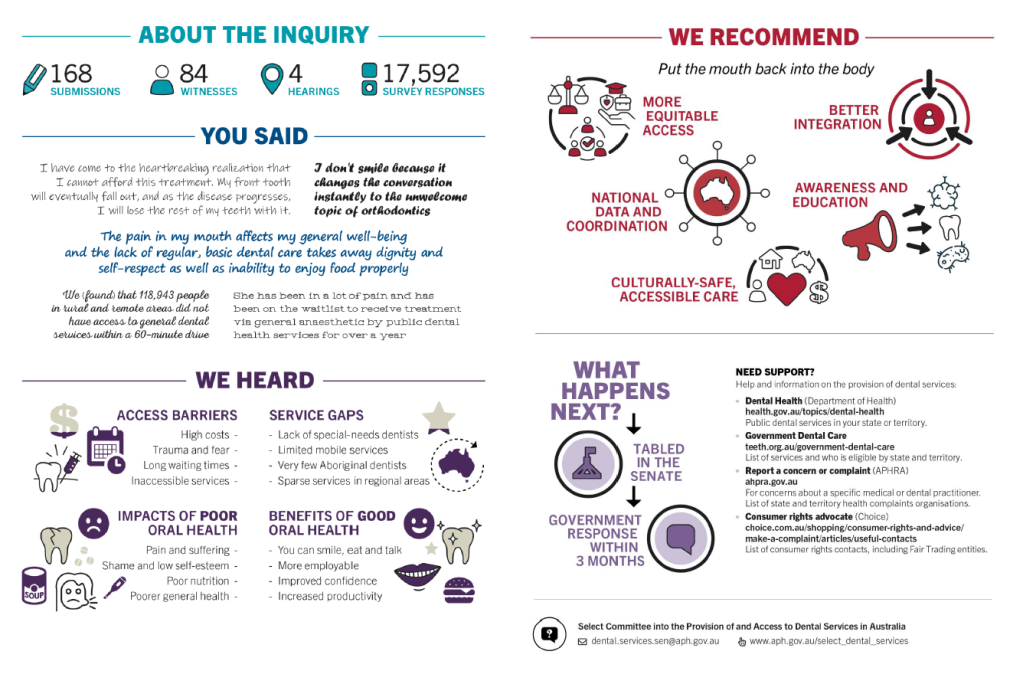
A Senate Select Committee into the Provision of and Access to Dental Services in Australia has been underway for the last year and their final report is now out.

It is titled A system in decay: a review into dental services in Australia.

VOHA provided a submission to this, and was invited to appear at one of their hearings.

You can read the committee’s two-page Infographic summary which not surprisingly gives a damning analysis of the current access to and affordability of oral health services. Basically the committee recognises the significant problems in the whole system, and recommends gradually moving towards a universal scheme.  

The Government has three months to respond.

You can download the whole report at: Select Committee into the Provision of and Access to Dental Services in Australia A system in decay: a review into dental services in Australia

Looking Back Looking Forward: Oral Health in Victoria and Australia 1970 to 2022 and Beyond

Your summer reading!

A new book on history of the Victorian oral health sector is a must-read for anyone working in the sector or interested in health policy over the last 50 years.

It is titled Looking Back Looking Forward: Oral health in Victoria and Australia 1970 to 2022 and beyond, and has been researched and written by two very experienced dentists/oral health policy managers, John Rogers and Jamie Robertson.

This is a must-read for anyone involved in oral health care and policy development. You can download for free at https://doi.org/10.26188/23721969.v1

But I recommend that every service delivery organisation purchases one for their staff and managers, both to increase awareness of the history and context of current care funding and approaches, but also as a resource for submission writing and general comms.

See flyer and details of how to purchase here:

VOHA welcomes Liberal Election announcement

MEDIA RELEASE

The Victorian Oral Health Alliance welcomes Thursday’s announcement that a Matthew Guy Liberal Government will significantly increase funding for public dental care to address long waiting times and put an emphasis on oral health this election.

“We have seen the waiting times for access public dental care balloon from 20 months to nearly 27 months over the past 4 years, which is too long to wait for clinically necessary treatment,” said VOHA spokesperson Tony McBride. “While people languish for more than two years on a waiting list, their oral health deteriorates leading to more problems with their teeth, and their general health suffers as a result”.

There has been no significant boost to funding to treat eligible adults in the public dental system, which means that only around 220,000 of the 1.5 million eligible adults have access to essential oral health care each year. This means that care must be carefully rationed, with no ability to comprehensively manage the complex conditions many patients have.

“We are pleased that our advocacy efforts over the past four years, meeting with MPs and candidates across Victoria, has resulted in this announcement. We hope that Labor, Greens and independents can support this boost in funding which is necessary to improve the oral health of Victorians,” said Tony McBride.

VOHA is also calling major parties and independents to support VOHA’s election policy platform focusing on prevention and health promotion and measures to address the growing workforce crisis in public dentistry. This includes measures to expand water fluoridation to communities like Heathcote, increasing dental outsourcing funding and targeting the marketing of sugary junk foods to children.

-ENDS-

Media Contact:

Mr Tony McBride

Spokesperson, Victorian Oral Health Alliance

E: oralhealth@tanjable.net

M: +61 407 531 465

Stop the Rot

Poor oral health continues to be one of the strongest indicators of inequality in Australia, yet dental health continues to be absent from health policy discussions in this country.

  • There are 200,000 older Australians living in residential aged care who have poor access to dental care.
  • The Aged Care Royal Commission highlighted significant neglect and countless stories of poor oral health.
  • We need a Senior Dental Benefits Scheme to ensure that older Australians can access dental care when they need it.
  • Older Australians deserve better than what they are currently getting.
  • We need you to tell our politicians to take action.

ADAVB is calling on the Federal Government to take urgent action to improve access to public dental care and help improve oral health.

The problem

Dental diseases are some of the most prevalent diseases affecting Australians across all ages. One in three children experience tooth decay by the age of 5-6 years, and more than 50% of Australians over the age of 65 years have gum disease. Dental problems are the leading cause of preventable hospitalisation for Australian children. More than 85% of dental care is provided through the private sector. People with poor oral health may experience pain and embarrassment, have trouble speaking and eating, miss school, have trouble getting a job, and develop other serious health problems.

That’s why it’s so important that all Victorians have access to regular dental care.

But there is one section of the community where these problems are exacerbated. Older Australians living in residential aged care have some of the poorest oral health in the nation, and suffer significant barriers in being able to access dental care. The Royal Commission into Aged Care Safety and Quality highlighted these issues for many of the nearly 200,000 people living in residential aged care.

The current public system can’t cope with the demand, with waiting lists that are now more than 2 years long evidence of this. What we really need is meaningful and coherent dental policy at the federal level, not the current erratic model we have experienced in the past where various schemes have been introduced and closed down.

There is clearly a need for government-funded dental-care programs that are targeted, have clear eligibility criteria, cover a broad spectrum of dental services, can be introduced in phased stages, and have minimal, if any, capital costs to address these oral health inequities. The Child Dental Benefits Schedule is an example of such a program that provides an important mechanism for socioeconomically disadvantaged children to receive dental care from either private dentists or public dental services.

The best place to start this reform is to address the oral health neglect in residential aged care. Older Australians deserve better than what they are currently getting.

ADAVB focuses on key recommendations including:

  • the establishment of a Senior Dental Benefits Scheme
  • Upskilling the Aged Care Workforce
  • Including oral health in the Over 75 Health Assessment and
  • Reviewing the Aged Care Quality Standards

VOHA encourages you to email your local Member of Parliament and candidates for the upcoming election which can be done HERE.

To access the full campaign click HERE.

Monash Health Dental Service celebrates success of employee drive-through dental clinic

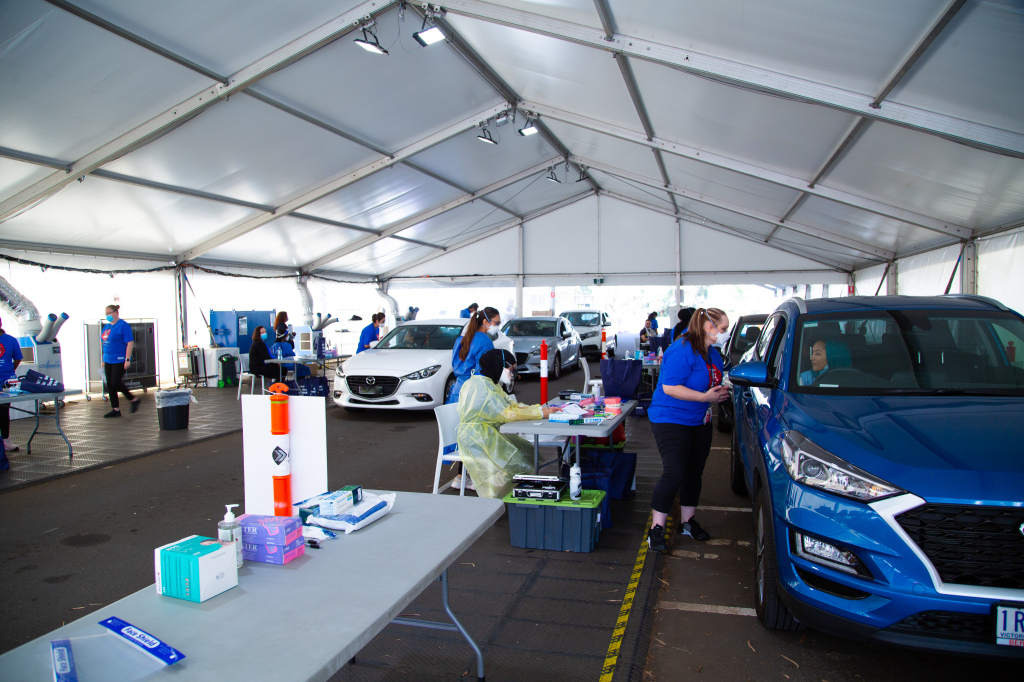
To commemorate World Oral Health Day, Monash Health Dental Services ran an employee drive-through dental clinic.

Monash Health Dental – free dental screening and oral health advice for employees

Utilising the COVID-19 drive-through screening model, the clinic offered Monash Health employees free dental screening and oral health advice from the convenience of their car.

Dr Ramini Shankumar, Unit Head Monash Health Dental Services, shared how providing this service to Monash Health employees was a rewarding experience for the Monash Health Dental Services team.

“The clinic was a great success, with close to 100 employees receiving a free dental screening. We are grateful that we were able to help our Monash Health colleagues prioritise their oral health. All employees who attended the clinic were very appreciative of the service we offered them.”

The Monash Health Dental Services team were commended by employees for this innovative delivery of care, and for their professionalism, expertise, and organisation on the day.

Many employees have faced barriers to getting their oral health checked due to the challenges of the pandemic or experiencing anxiety around visiting the dentist.

The clinic offered employees the convenience of receiving dental screening from the comfort of their car, whilst providing them with oral health advice and friendly encouragement to seek further dental care and treatment if it was required.

All employees who attended the clinic received a gift bag and went in the draw to win some great prizes, including an electric toothbrush or a free dental scale and clean appointment.

Thank you to Monash Health Dental Services for encouraging your employees to prioritise their oral health and for facilitating the drive through dental clinic.

VOHA congratulates Monash Health Dental Services on this innovative idea and looks forward to sharing further ideas with readers in the near future.

VOHA recognised in Pride of Place report

House of Representatives Select Committee on Regional Australia – Inquiry into the future of Regional Australia

The recent Pride of Place report has been published highlighting the access issues rural and regional Australians face.

The Terms of reference for the House of Representatives Select Committee on Regional Australia included:

 Examining the effectiveness of existing regional service delivery and development programs;
 Examining the contribution and role of regional Australia to our national identity, economy and environment;
 Promoting the development of regional centres, cities, towns and districts including promoting master planning of regional communities;
 Promoting private investment in regional centres and regional infrastructure;
 Examine the key drivers for unlocking decentralisation opportunities for both the private and public sectors;
 Promoting the competitive advantages of regional location for businesses;
 Investigate the development of capital city size regional centres in strategic locations and the benefits this offers regional cities, capital cities, the Australian economy and lifestyle;
 Examine the potential for new developments, towns and cities to be built in regional Australia;
 Examining international examples of nations who have vast and productive regional areas, which are sparsely populated;
 Examining ways urbanisation can be re-directed to achieve more balanced regional development;
 Identifying the infrastructure requirements for reliable and affordable health, education, transport, telecommunications, clean energy, water and waste in a new settlement of reasonable size, located away from existing infrastructure; and
 Consider other measures to support the ongoing growth and sustainability of regional Australia

The report recognises the issues related to a limited regional health workforce and notes:

In addition to being difficult to afford, Services for Australian Rural and
Remote Allied Health also noted the lack of availability of allied health
professionals in regional Australia:

The shortage of [allied health professionals] working in rural and remote
Australia is more severe than for either the general practice or hospital
medical workforces or for nursing. It means many people, especially those
without substantial personal means are unable to access allied health services
that would enhance their health and well-being.

This sentiment was supported by the Victorian Oral Health Alliance who
expressed concern at

‘… an unacceptably long waiting period to access
public dental care in most of regional Victoria (2022, pg. 63).’

Further information on VOHA’s submission can be found HERE.

The full report for the inquiry can be found HERE.

Access to Dental Care still causing consumer problems

A recent survey of consumer experiences of trying to get timely dental care has again revealed significant and diverse problems for consumers including one person resorting to super glue to fix a broken tooth while waiting for care.

The Victorian Oral Health Alliance (VOHA) asked staff in community information agencies around Victoria, facilitated by its member Community Information & Support Victoria, to share stories of their clients’ oral health issues, especially around access to timely care. An analysis of the 20 (deidentified) client stories/experiences reported revealed the following.

Low income and vulnerable people

The stories all related to low-income people, most reliant on a benefit or pension. Some had mental health, homelessness or family violence issues they were coping with. For example, one aged pensioner, aged 79 and living in public housing and on a tight budget, needed 8 teeth extracted due to poor dental hygiene.

Poor oral health with significant impacts

Almost all clients have very poor oral health. They reported many teeth missing, cracked or rotten, and in some cases needed 8 or more teeth replaced or extracted. Gum disease and ongoing pain were also commonly cited. One client even reported using super glue to repair a broken tooth.

In all cases, the lack of dental treatment was having a direct impact on their overall health and their lives more broadly. Some experienced ongoing pain and discomfort. Others were prevented from eating a full range of foods. Some were extremely self-conscious of his appearance (e.g. were embarrassed or talked with their hand over their mouth). Factors like this caused continued stress and some experienced a serious effect on their self-esteem, confidence and capacity to cope. In turn, such issues had broader implications for people’s physical and mental health and wellbeing, including affecting employment prospects in some cases and an ability to go out or socialise normally with others.

Cost and long waits key barriers

Cost of treatment was universally described as their barrier to timely private care, along with the long wait for public care. One client reported that the cost of treatment was beyond their means, but long term this probably implies that more expensive treatment will be required down the track.

Most clients were on a public clinic waiting list, and most had been waiting more than 9 months, two of them for than two years. Clients expressed frustration with such long waits for public dental care, which had been exacerbated by Covid. Although they couldn’t afford it, in the end, some people had borrowed money in order to get private care instead.

To access more Consumer Stories click HERE.

Dental queues getting longer

The Victorian Oral Health Alliance is calling on the State and Federal Governments to focus on oral health and increase funding for the provision of public dental care following the release of new data from the Australian Dental Association Victorian Branch which shows waiting times in Victoria continuing to increase.


There are more than 1.5 million Victorian adults eligible for public dental care who are now forced to wait on average 24.8 months to receive an appointment for basic dental care, an increase of 2.1 months since June 2021. This is the longest waiting time for the past 10 years.


The COVID-19 pandemic has restricted access to dental care, and this has seen far fewer people able to receive treatment. However, this has just exacerbated the problems of an already underfunded system.


Public dental care is funded predominantly by the State Government, with additional funding from the Commonwealth through the National Partnership Agreement and the Medicare Child Dental Benefits Schedule. There is an important role for the Commonwealth, firstly through the establishment of a Medicare Seniors Dental Benefits Scheme (a key recommendation of the Royal Commission into Aged Care Safety and Quality) and reform of the National Partnership Agreement to develop a sustainable funding model.


VOHA welcomes the announcement in December 2021 by the Victorian Government of an
additional $27 million this yea
r, both for the catch-up care it will fund but also for the recognition of oral health as an important issue for many Victorians. However it is important to recognise that this band-aid measure will not address the longer term issues in public dentistry.

With poor oral health contributing to poor overall health and affecting social and emotional well-being, it is time for both the State and Federal Governments to fund dental care properly. There is a need to implement one of the key recommendations of the Aged Care Royal Commission through the establishment on a Medicare Seniors Dental Benefits Scheme, as well as boosting the National Partnership Agreement funding for public dental care. The State Government must also increase their funding to ensure that more patients are able to access necessary dental care.